Anatomy of a Consult
Using the arrows, navigate through the three introductory slides that will cover
- What we cover in this module
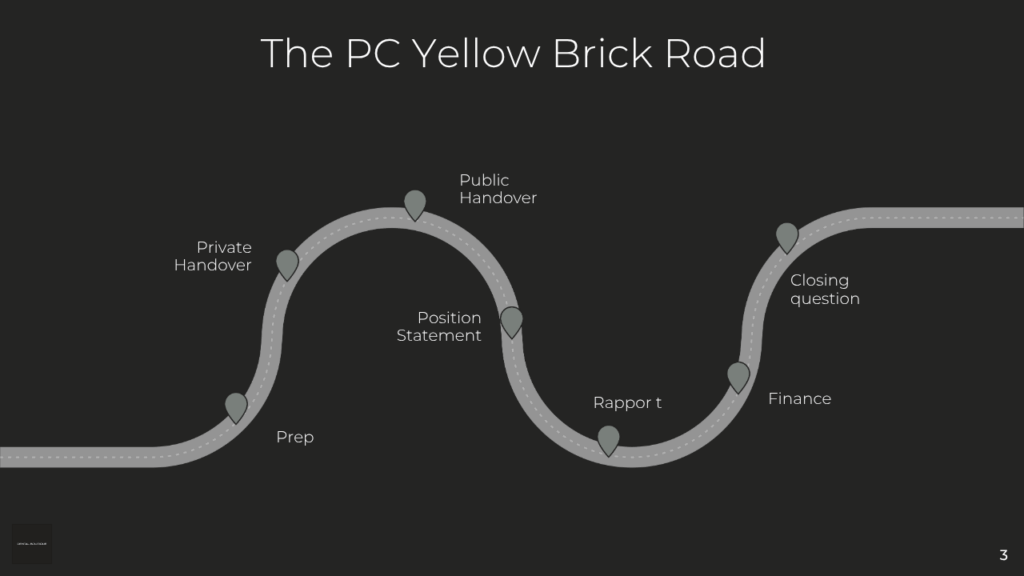
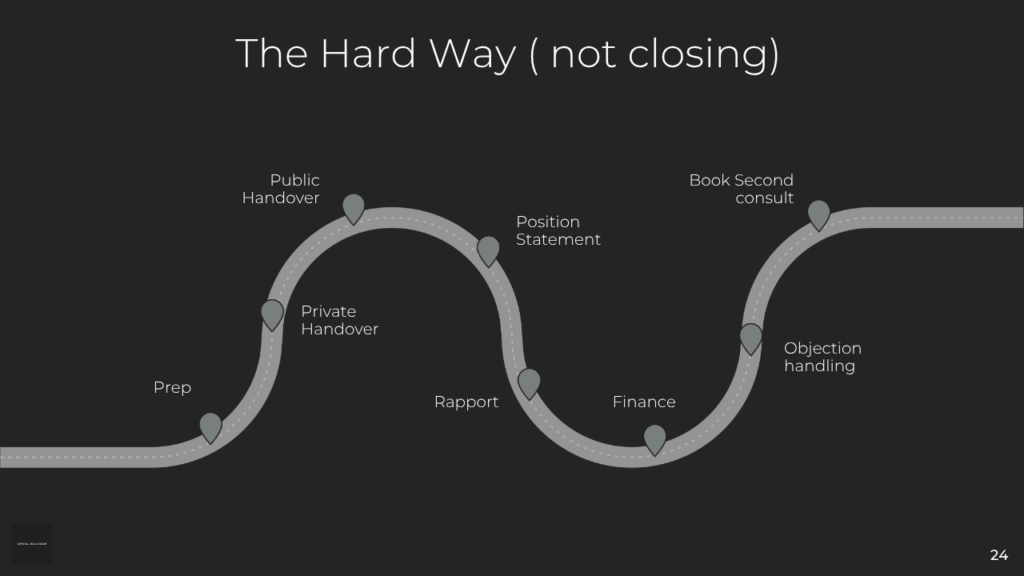
- The PC Yellow Brick Road

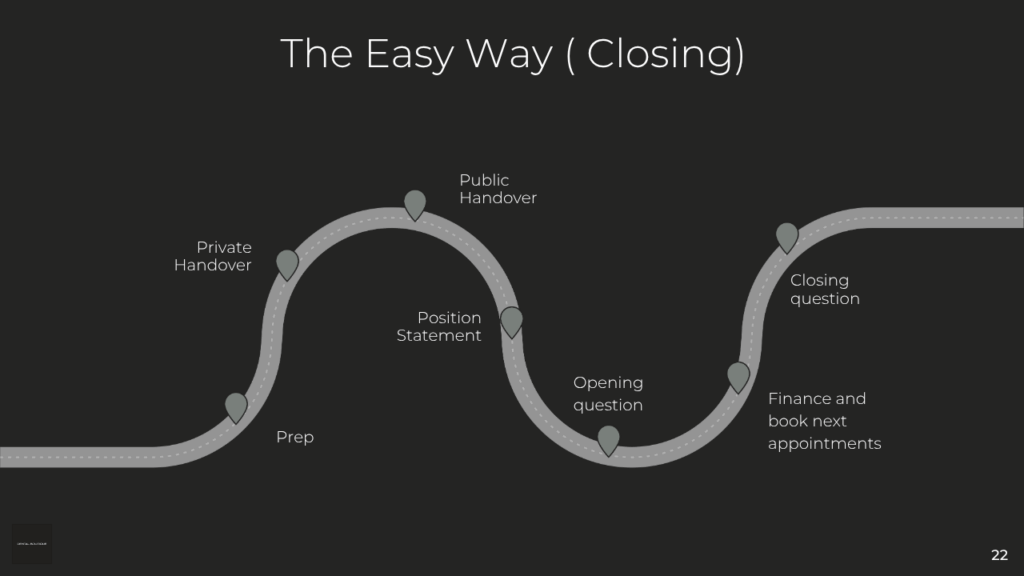
The Private Handover
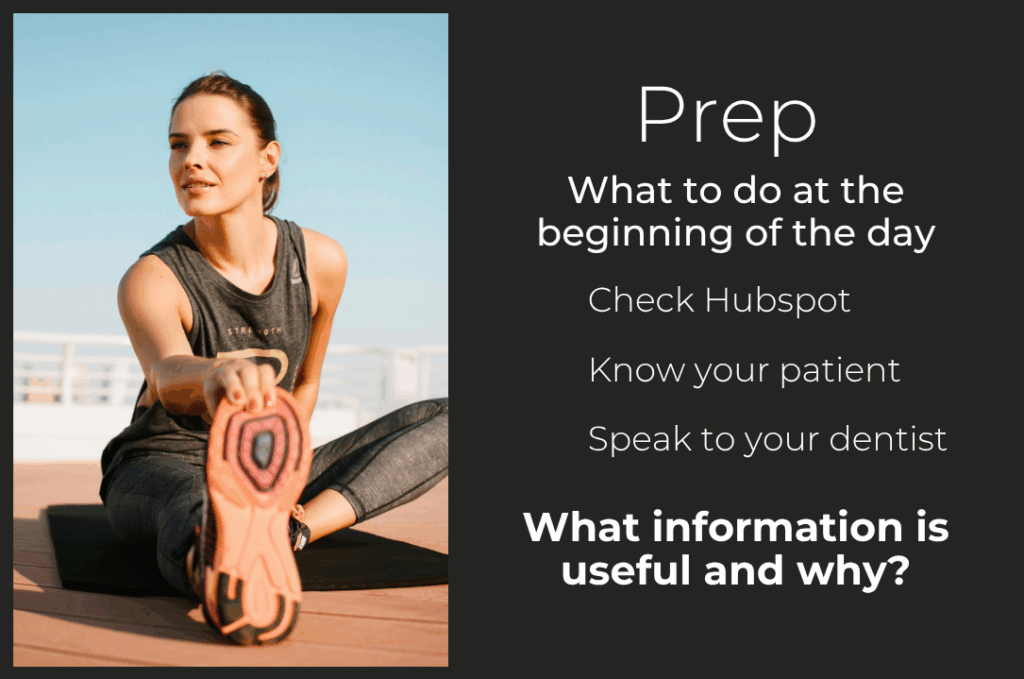
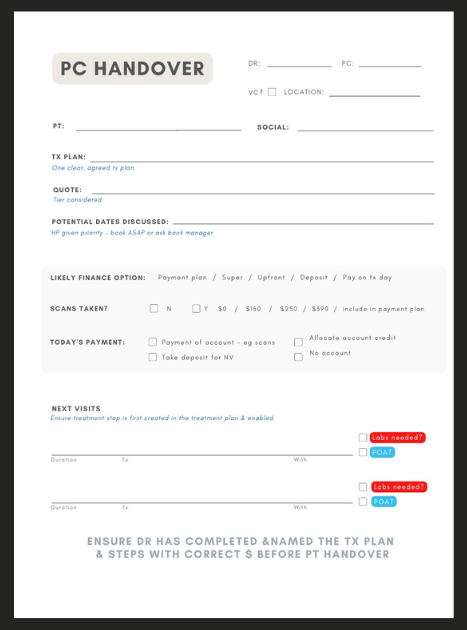
The Private Handover is an essential opportunity for the Dentist and Patient Coordinator to come together to discuss the patient, with the purpose of setting the Patient Coordinator up for success to guide the patient through their treatment journey.
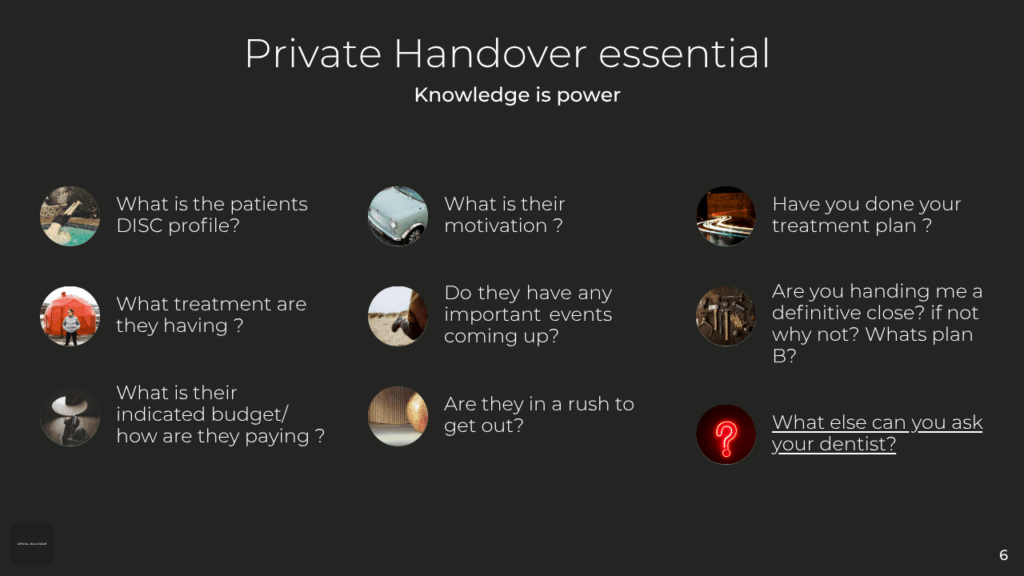
What will the Dentist discuss with the Patient Coordinator?
- What is the patient’s DISC profile?
- what is their motivation?
- Has the dentist done their treatment plan?
- What treatment is the patient having?
- Does the patient have any important events coming up?
- Is the dentist handing over a definitive close? if not, why? And what is Plan B?
- What is the patient’s budget and how are they paying?
- Is the patient in a rush to get out?
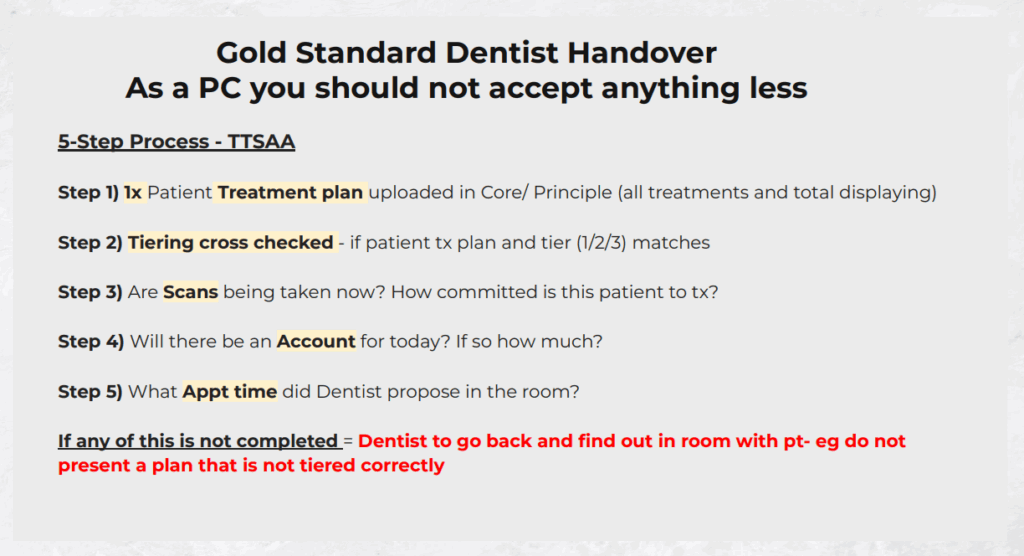
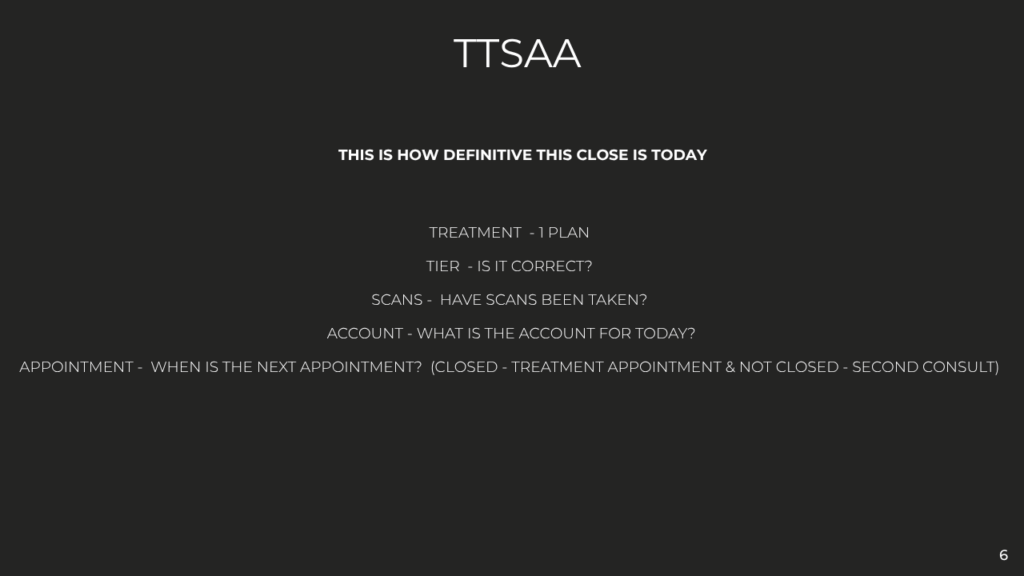
TTSAA
We have a model called TTSAA which is utilised to determine how definitive the close is, and ensures that we have considered the important elements of the consult:
- T – Treatment – 1 plan
- T – Tier – Is the tier correct?
- S – Scans – Have scans been taken?
- A – Account – What is the account for today?
- A – Appointment – When is the next appointment?
Using the arrows, navigate through the five slides below that explore the Private Handover:



The Public Handover
The Public Handover is an essential opportunity for the Patient Coordinator to capitalise on the connection that the dentist has established with the patient, by creating an exceptional experience at every touchpoint in the public handover.
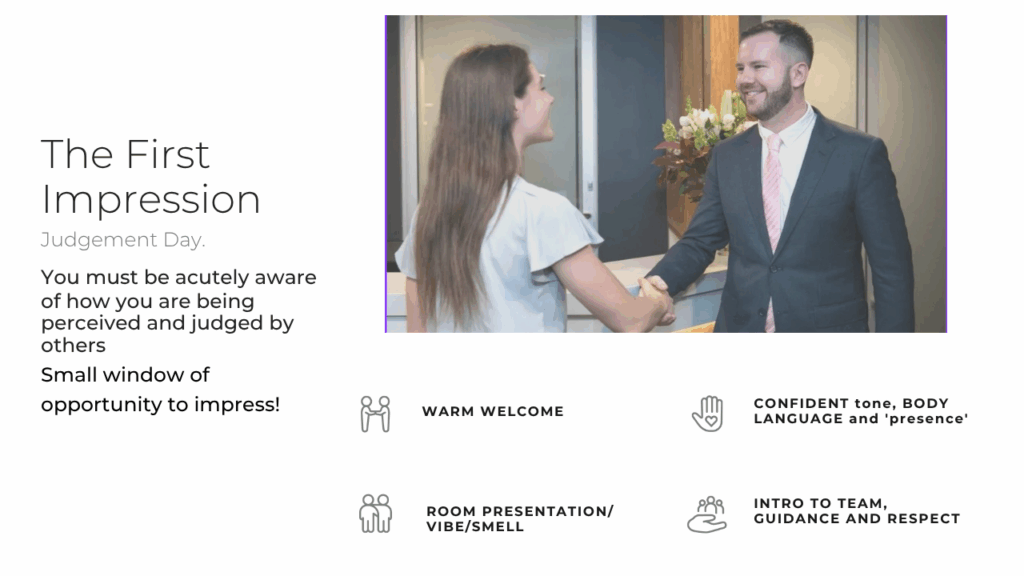
The First Impression
Establishing and maintaining a professional and empathetic connection with the patient, where the patient feels heard, and valued, and where we make a considered effort to build confidence and ensure that we work towards an optimum outcome for the patient so that their experience with Dental Boutique is exceptional.
Patients may not say anything directly to us, but rest assured that they will be critiquing everything that we do. This is a very important life event for the patient and their analysis of how we interact with them will contribute to their trust and confidence in us.
- Greet the patient with a warm welcome.
- Present a confident demeanour through your tone, your body language, and your presence.
- Ensure that you cultivate the right environment – right down to the presentation and smell of the room.
- Introduce the patient to the team, show that we all respect and value the patient, offering dedicated and bespoke experience that is right for each individual patient.
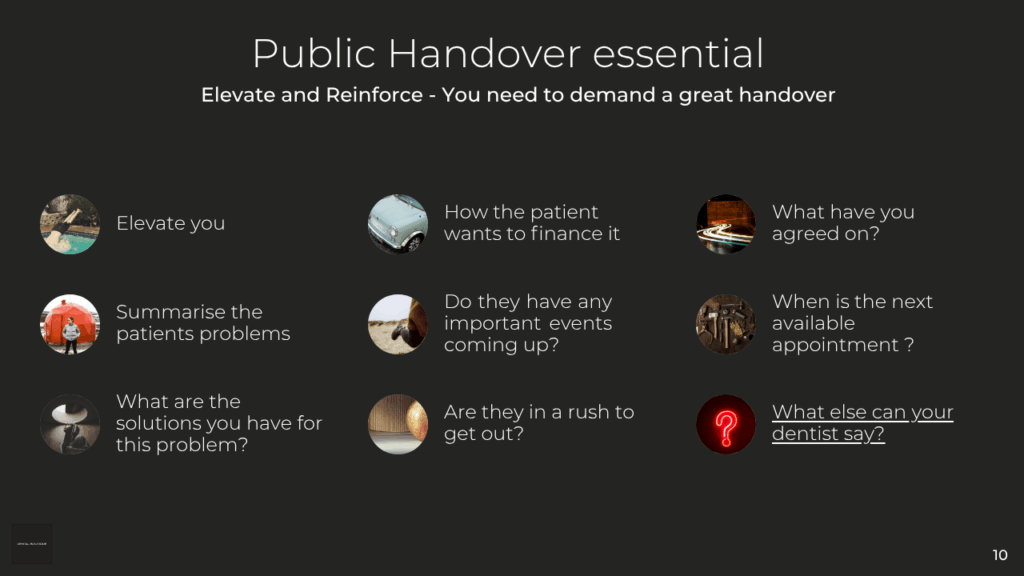
Public Handover Essentials
Some of the essential elements of an effective public handover include:
- Summarise the patient’s problems
- What have you agreed on?
- Do they have any important events coming up?
- What solutions do you have for the patient?
- Are they ina rush to get out?
- When is the next available appointment?
Using the arrows, navigate through the four slides below that explore the Public Handover


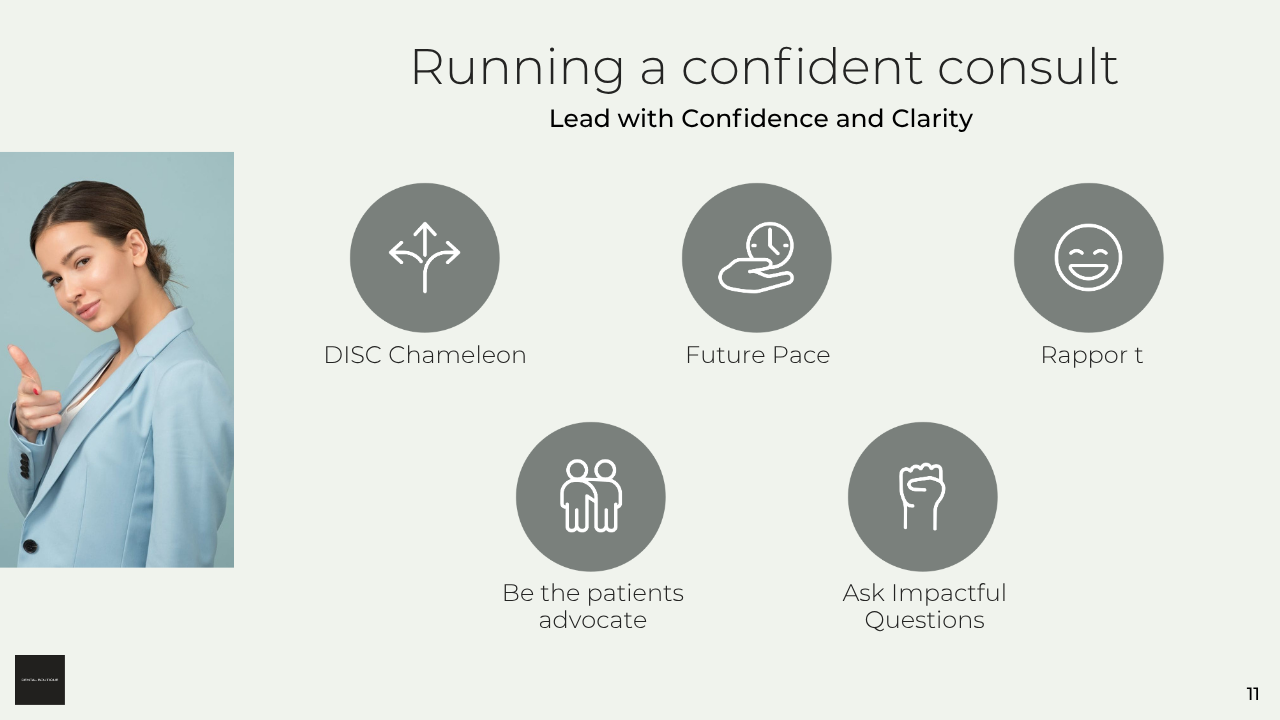
Being the Patient’s True Advocate
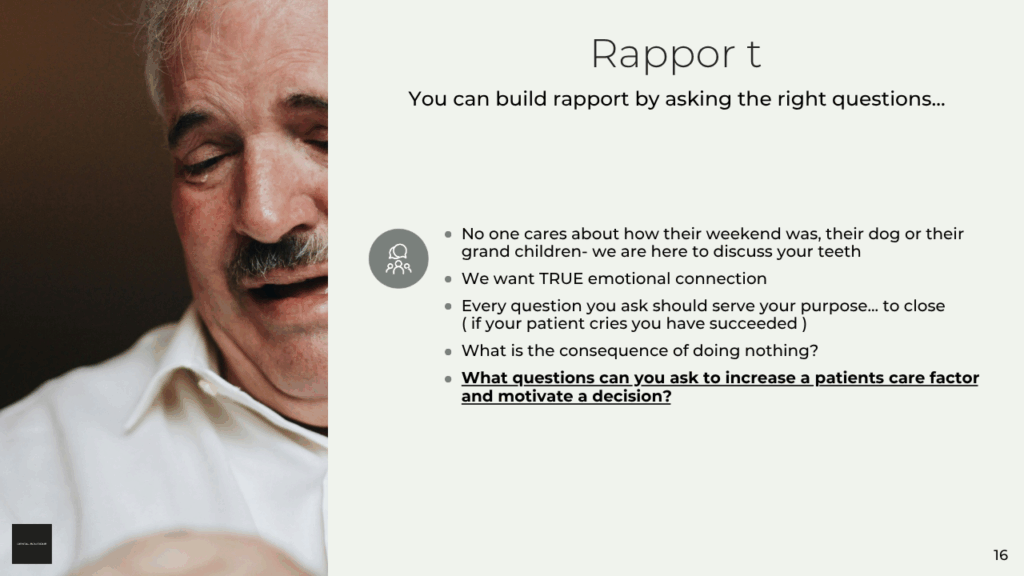
Using the arrows, navigate through the four slides that explore building an authentic connection with the patient and being the patient’s true advocate.



Patient Profiling
Tier Table
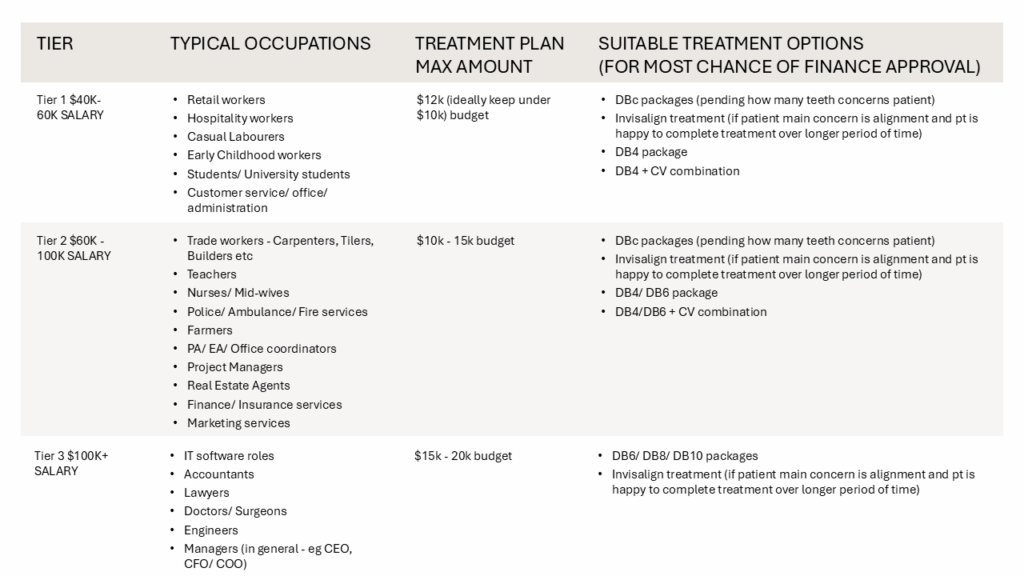
Finance Options
How will the Patient Finance their Treatment?
There are a number of options available to patients to finance their treatment. We will explore the options in detail in the Finance Options module, though here is a summary of this options.
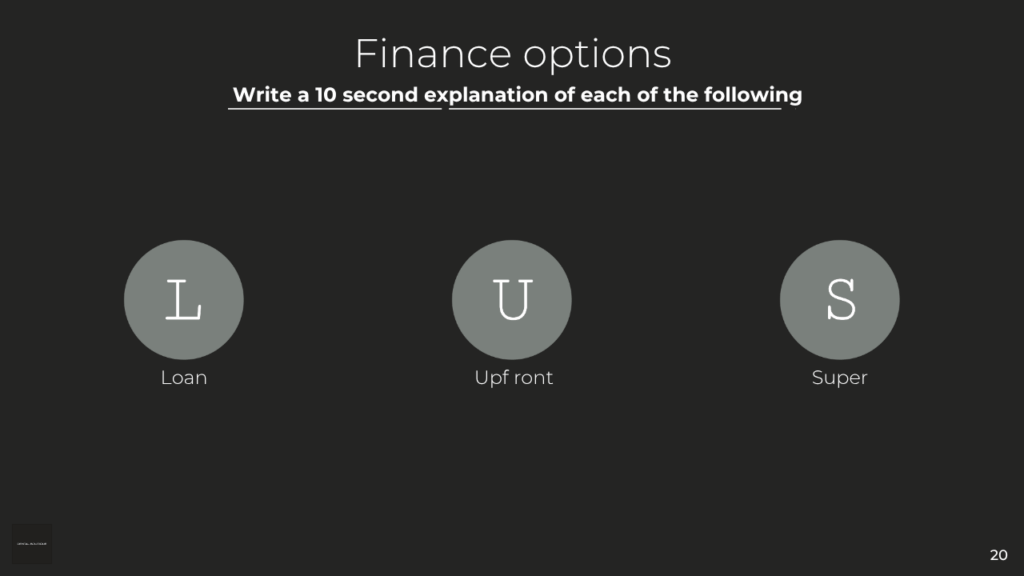
Upfront
Some patients are in a position to pay for their treatment upfront. This means that they will pay for their treatment using their own oney, and will not need to enter into a arrangement with a finance provider for their treatment.
Loan
The majority of our patients refer to financial providers for support in financing their treatment.
There are a number of options available to patients and we will explore some of them in the Finance Options module.
Is it important that we are mindful of our conversations with patients when it comes to discussing how they will finance their treatment, particularly our language choices. We are not accredited financial advisors, so we must ensure that we do not provide recommendations, for example. Our purpose is to assist patients, particularly with the administrative processes associated with financing their treatment.
Super
Patients may be able to access their Superannuation to finance their treatment. There are strict legislative regulations that we must adhere to when assisting patients who choose to access their Super.
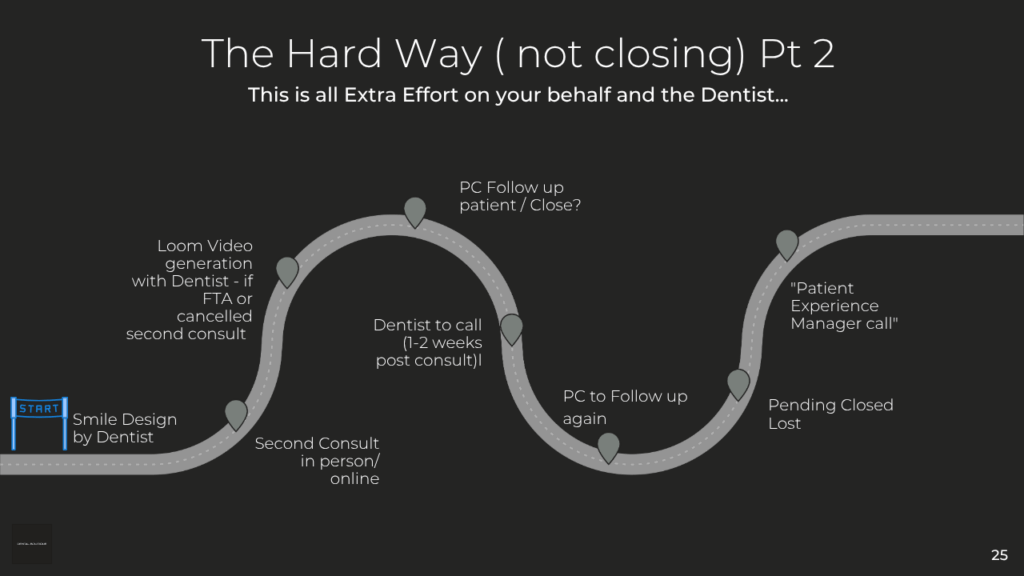
Closing Conversations
Using the arrows, navigate through the seven slides that explore effective techniques to closing conversations.
Summary
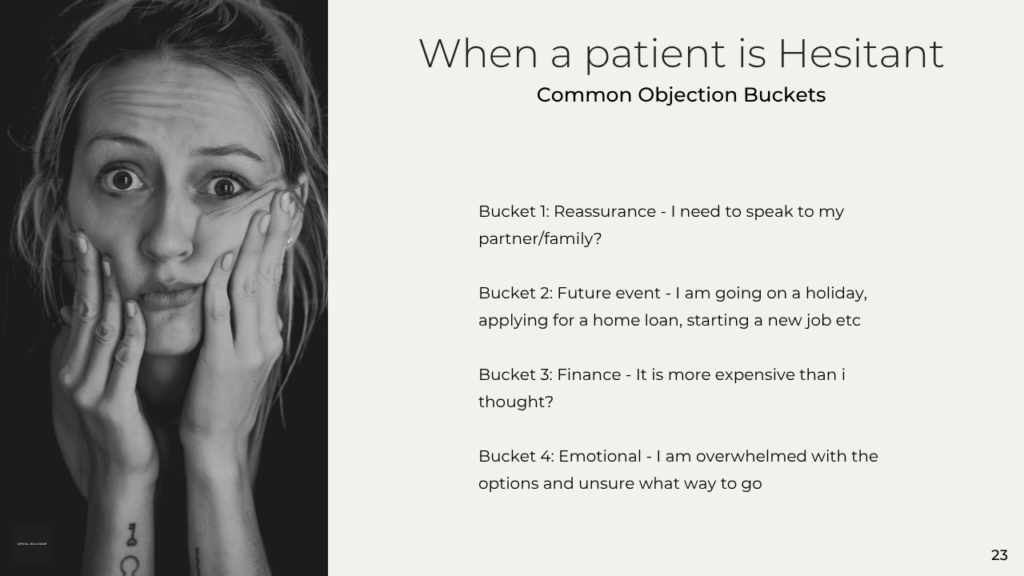
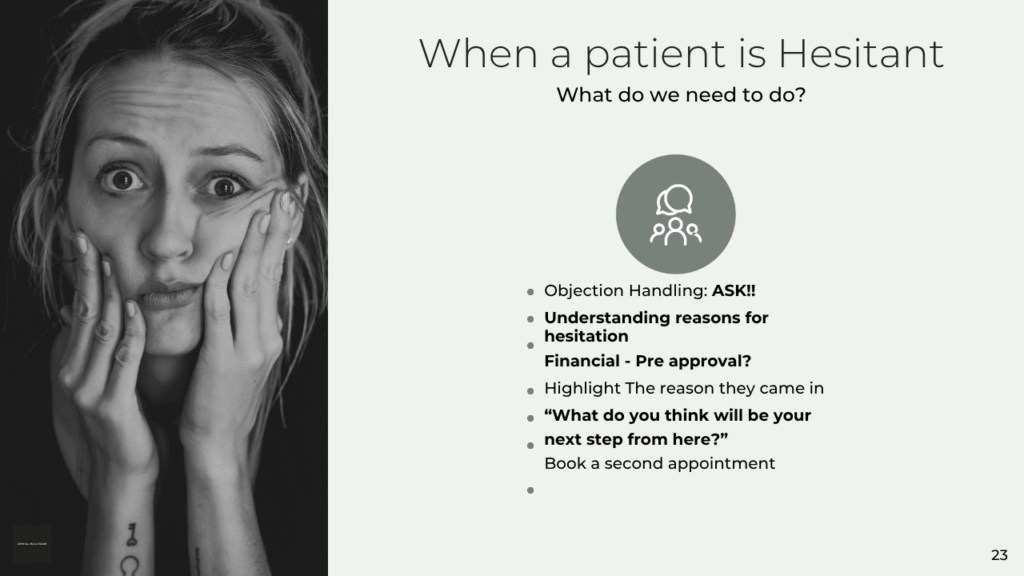
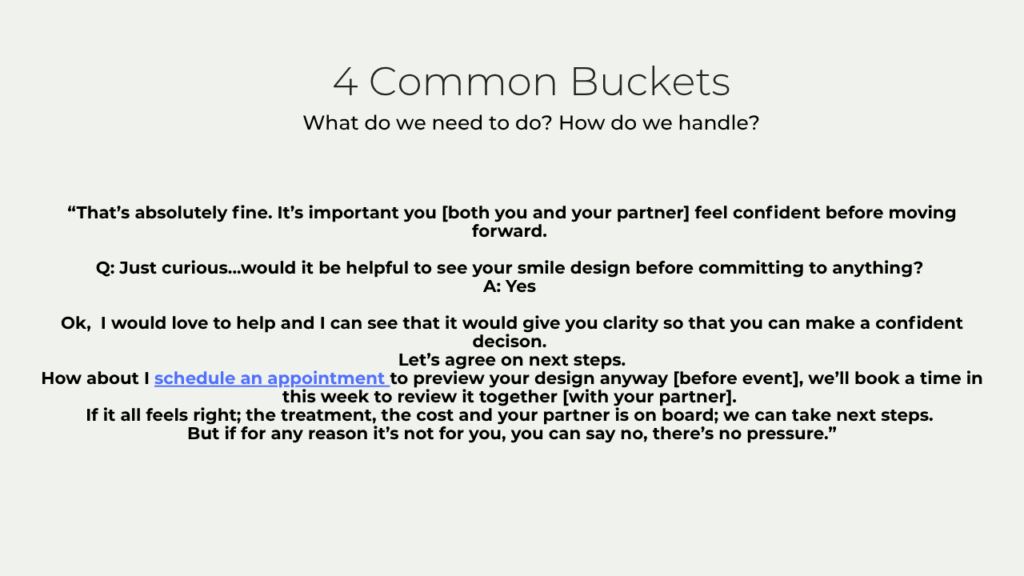
Objection Handling Examples
The following three examples explore the common objections that you will face in your conversations with patients.
Case 1: DB10
Objection: “I need to speak to my husband first”

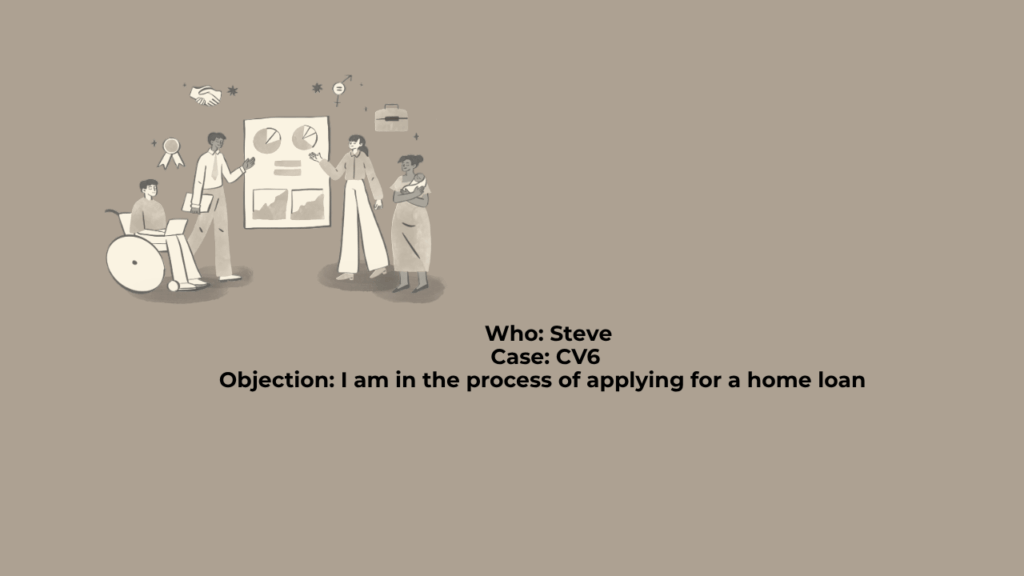
Case 2: CV6
Objection: “I am in the process of applying for a home loan”
Case 3: Invisalign
Objection: “I’ve got another consult booked”