In this lesson, we will cover the following (click on the title to jump ahead)
- What is Core Practice?
- How to book a new consult
- How to reschedule a consult
- How to cancel a consult
What is Core Practice?
Core Practice (often just referred to as Core) is out booking management platform (BMP) for most of our Australian sites and all our New Zealand clinics. The only sites that use a different system is Sydney and Chatswood (we will cover that in the next lesson).
There are two URLs for the BMP, one for AU, one for NZ.
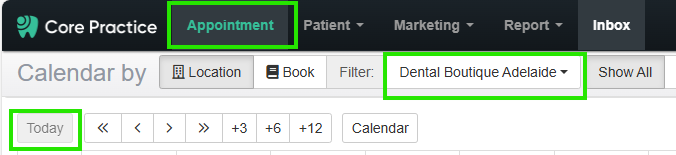
Log into Core and select the “Appointment” tab.
Ensure you select the correct clinic in the location filter.
Always start looking for appointments from today. Our aim is to fill the next available appointments first.
Core is used by Client Services to book new patient (NP) consults and by the site to manage the books for all the dentists and their treatments.
As the FOC agents don’t have access to Hubspot, this is where we leave communication between Client Services and the sites about the patient.
Information such as
- Important personal info from the patient
- Dental anxiety
- Pregnant
- Deaf/blind
- Wheel chair access
- Rescheduling/cancellation notes
- Or maybe they’re just running late and called us to let us know
- Availability for communication
- “Call after 4pm”
- SMS only
- If you’ve booked them in along side another family member
- Extended travel
- Lives 3 hours drive away
- Flying from interstate
- Why they requested a dentist
- Family/friend referral
- Know them personally
- Seen on Instagram/facebook
It’s important to remind at this stage, that the only appointments we work with in Client Services are the NP Consults – any enquiries by existing patients need to be forwarded to the site.
How to book a consult
Once we’ve ascertained the contact is ready to make a booking and we have their concerns – we need to book them in. There are three main steps in this process.
- Find a dentist that suits the patients dental concerns.
- Check availability of dentist.
- Lock in the appointment.
Finding the right dentist
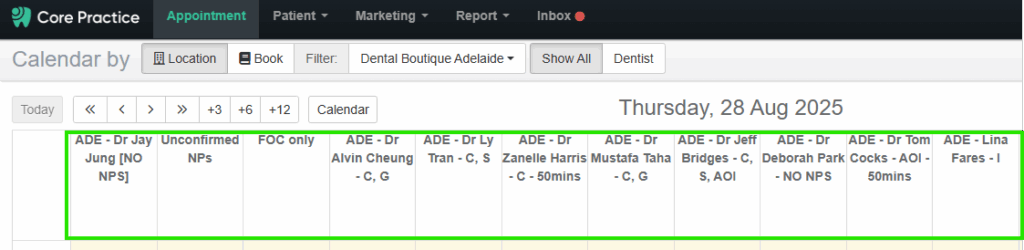
Once we are logged into Core and on the appointments page, the first place to look to find a dentist is that does the treatment the patient is interested in.
The main treatment codes we look for are
- C – Cosmetic
- S – Surgery (Single implants)
- AOI – All on Implants
- Some sites do not use this tab as all surgical dentists can do AOI. If no AOI, book with S
- I – Invisalign
- Some sites also have O for orthodontic (braces)
- G – General
There are a few other notes in the dentist bio’s. The above info covers 99% of patients you will be looking to book. Other notes to look for are
NO NPS – This dentist does not do NP Consults, do not book
50 mins (or any other time) – This dentist needs their Np consults setting for that time length not the standard 60 mins
GG – Gum Grafting (if not an option, look for an S)
D – Dentures (if not an option, look for AOI)
OHT – These are Oral Health Therapists – they are not dentists and can not see NP patients for anything other than check up/cleans
Dentist availability
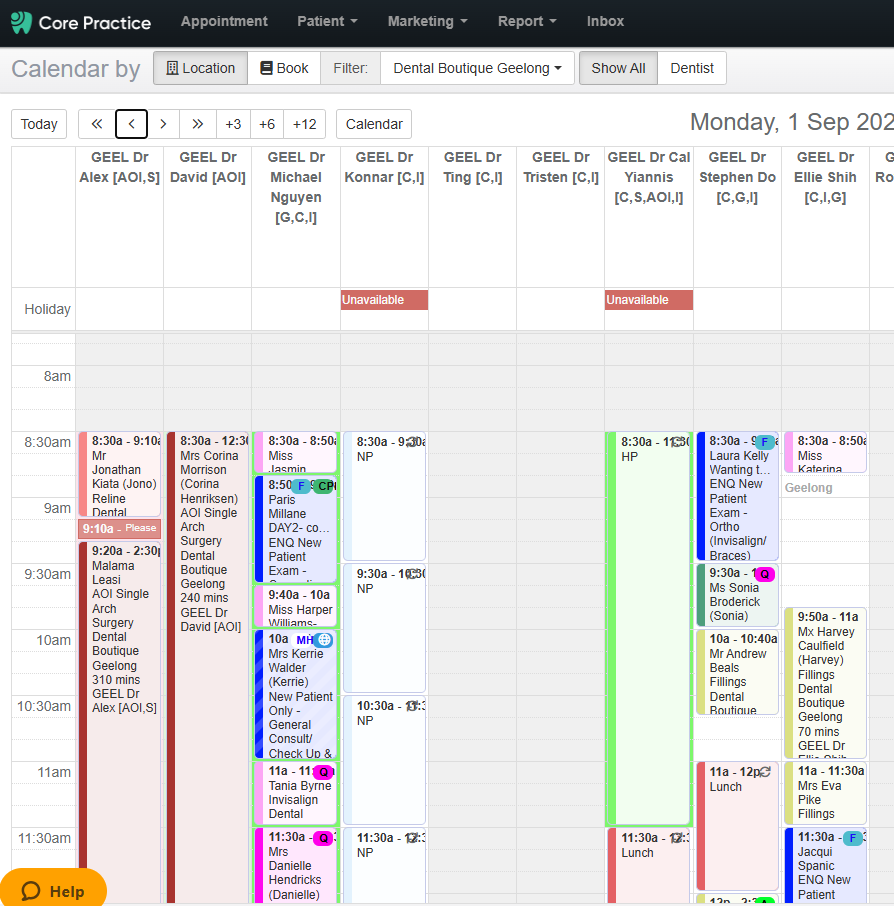
The next thing we need to check is that the dentist is available that day – if there is a red note in the row below the bio, that tells us the dentist is not available for the day.

Any of these ‘Away’ days, we won’t be able to schedule appointments.
There might also be notes like “course” or “training” etc that come up in this section.
The final part of finding an appointment is actually looking at the schedule and finding a free space in the books to book the NP consult.
For our purposes, we can book in any WHITE spaces. Providing it is an appointment that suits the dentist bio info and is long enough to meet the booking requirements
- NP consults in person are 60 mins by default. The only exception is if the clinician requests more/less time
- Online discover consults (ODC, this is a video consult) are 30 mins
- Emergency appointments are 30 mins
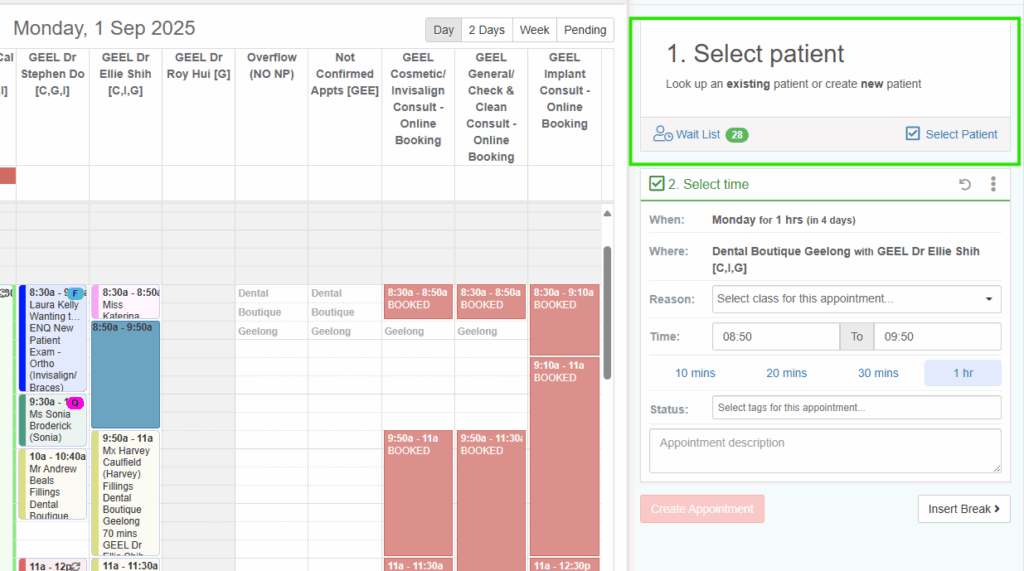
We can see here, Ellie has a 8.50am appointment available – lets book that in below!
Lock in the appointment
All we need to do in Core is to click and drag on the appointment time we want – ensuring we fill the full appointment time (60 mins in this case)
Once we highlight an appointment, it blocks it out across the board and no one else can now take it.
This opens the appointment info page on the right hand screen.
Click on the select patient section so we can enter the patient details in.
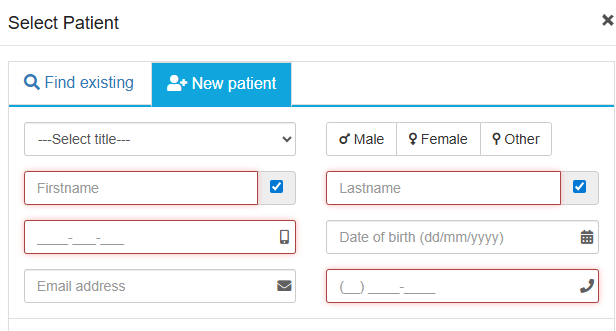
This opens the patient page, we select “new patient” then fill in the important fields in there
- Name
- Contact number
- you must ensure this is accurate and contains no spaces or +61 etc. Otherwise the sites will have no way to contact the patient to confirm the appointment
- Date of birth
There are other fields, but we don’t need to worry about those.
Once we’ve created the patient profile, next step is to select the appointment type.
There are a range of options to choose from. We need to ensure we are selecting the correct NP consult option that corresponds with the patients needs
Each appointment type (NP consult, ODC etc) has categories of appointments. It’s crucial that the appointment type lines up with what we are booking the patient in for
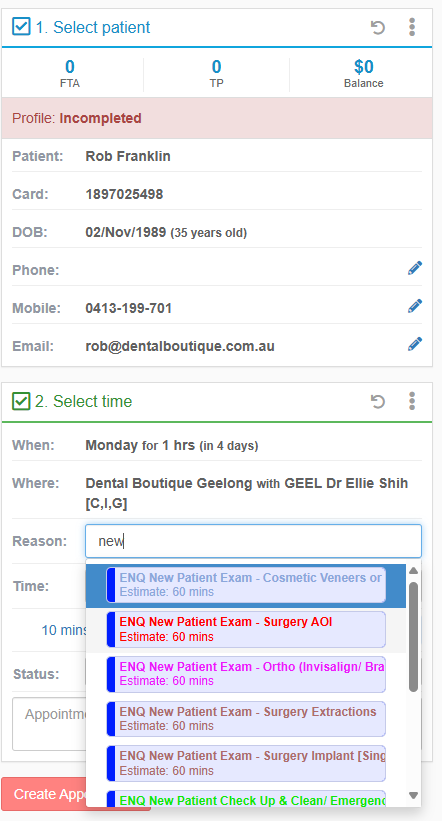
The majority of our bookings are NP consults. We find these by typing “new” into the search bar to bring up all the options of appointments.
Next, just select the correct reason – in this instance, we were booking a Cosmetic consult.
This is all the essential parts of the booking.
In some cases, we need to leave a note or tag for a booking.
Tags we often use in Enquiries are
- Family
- This tag is for when we book multiple people together in one booking (partners, parent/child, siblings etc)
- It shows the site that there are two bookings together that cant be shifted unless we can move both together.
- Dual
- This is if a patient has multiple appointments in one day.
- We try avoid doing this, but if they insist, we may book a NP consult and a check up/clean for example. BOTH appointments need to be tagged
- Dental anxiety
- Helpful to let the dentist know up front to be extra considerate
- Requested date
- If a patient is travelling for the appointment or taking time off work etc – lets the site know not to bother trying to move them
- Requested clinician
- If a patient specifically requests to see a dentist. Best to let the site know this too so they don’t try move the patient to a different book.
Confirming the appointment
Once the appointment is in the book, we need to confirm it with the patient while they are on the phone.
This helps solidify the time and date in their mind and also ensures we have the correct number in Core.
Click on the NP consult you just booked to open the appointment.
Click on the little paper airplane icon and select SMS chat.
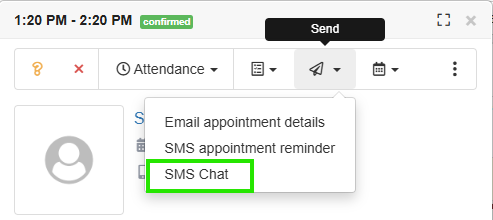

Select the template drop down and search “enq”.
This will bring up all the templates for each site.
Select the ENQ template that suits the clinic you just booked.
Here is a video showing the process from start to finish.
How to reschedule a consult
Occasionally we get a call to enquiries to reschedule a NP consult. Again, it’s important to note that we ONLY work with NP consults – if an existing patient calls to reschedule any of the exam/treatment/reviews etc, we transfer to site.
It’s important to remember that we keep the conversation around their attendance and positive. Avoid any phrasing that suggests cancellation or not arriving.
“Thank you for letting me know! Is there another date/time we can accommodate you for this week? I can check for you”
We start by searching for the patient in Core. The easiest way to find a patient is to use the search bar in the top right.
Type the patients name or email into that field and select them from the list that autopopulates.

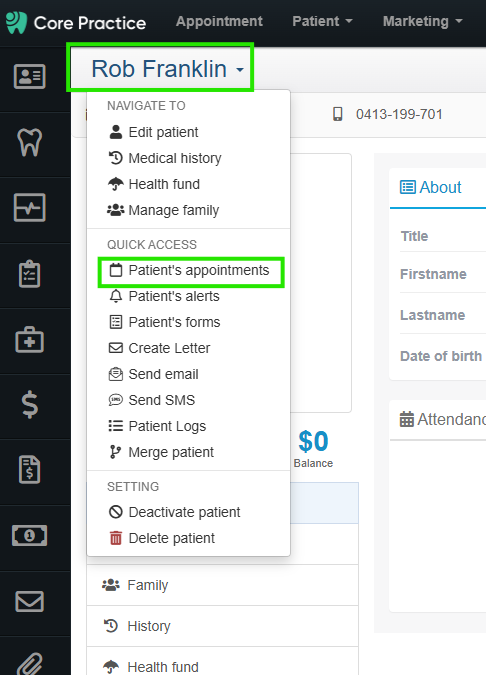
This will open the patients Core file. From here we click on their name in the upper left of the patient screen.
Then select the Patient’s appointments to bring up the up coming appointments.
Select the one the patient wants to reschedule.
Once we select the NP consult, it will take you back to the appointments page. Find the consult and click on it.
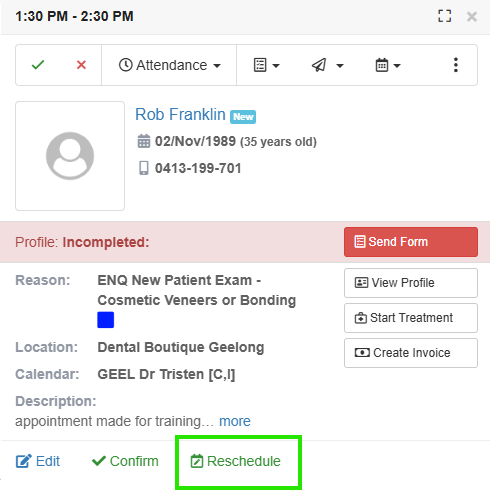
Click on “Reschedule”.
This will close the details window and highlight the current time in red.
Select the date/time that the patient wants to move to.
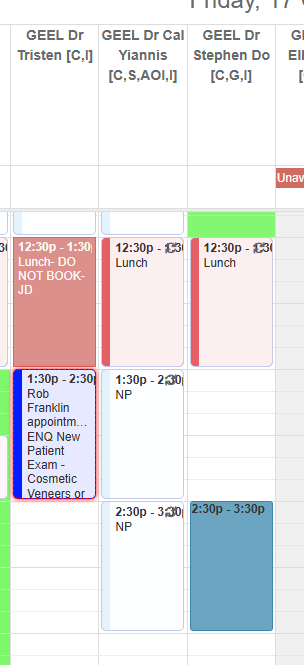
This will move the appointment to the new time.
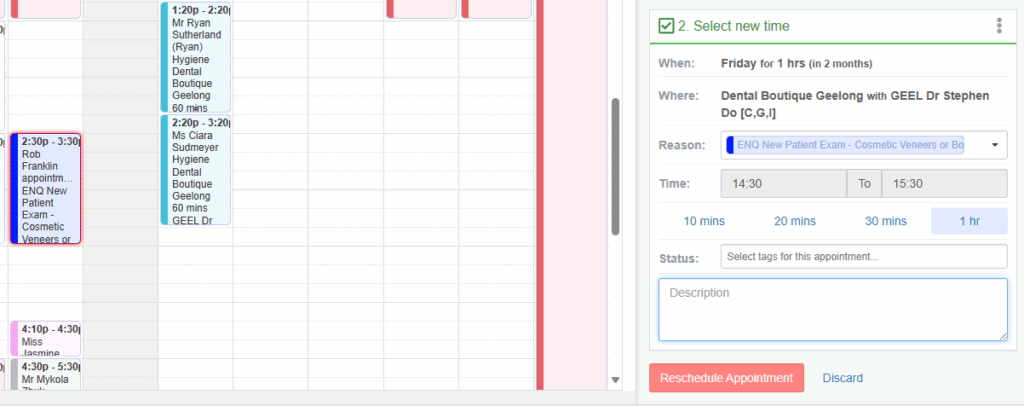
All we have to do now is click “Reschedule Appointment” to secure the new day/time for the patient.
How to cancel a consult
In similar fashion to reschedules, we sometimes get patients call to cancel.
Before we just go ahead and cancel, we ALWAYS offer to reschedule! Don’t just let them go, offer another time or remind them we offer medical certificates if work is an issue.
- First word track would be something like this.
- “Thanks for reaching out and letting us know. When is a good time for me to reschedule that to?”
- Failing that, the patient doesn’t want to put a new appointment in the book, next step is this
- “Not a worry, can I arrange a call back in a week or so once you’ve had a chance to assess your schedule”
- The time line offered on this will depend on the reason they are cancelling.
- If they are in hospital, lost a family member etc – offer a call back in a month maybe as they will need longer.
- “No worries, we can offer medical certificates if you need to take time off work.”
- This one is great if they use work as an excuse!
- “Not a worry, can I arrange a call back in a week or so once you’ve had a chance to assess your schedule”
- If they decline this too and really push that its not possible to come in, then we proceed with cancelling.
We follow the same method as the rescheduling, up to the point where we would click “reschedule”
- Find the patient.
- Find their consult.
- Click on it in the calendar.
Now, instead of reschedule, here is the difference
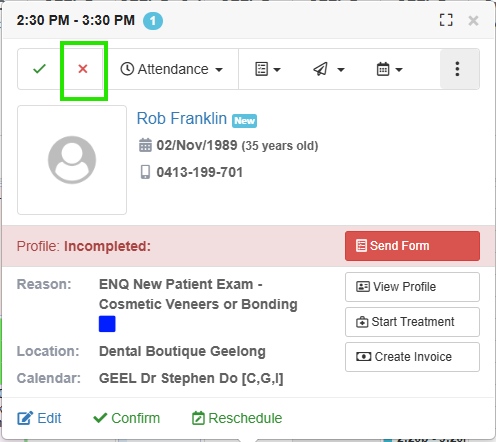
Click on the red cross.
This will open the cancellation page on the right of the screen.
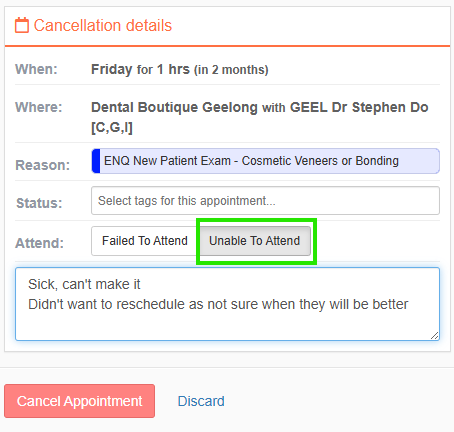
We need to select “unable to attend” – this is what we choose as they are giving us notice of the cancellation. “Failed to attend” is for patients that just don’t show up. The site use this option.
It’s also helpful to leave thorough notes as to why the patient is cancelling. This helps the site decide when they call them back to try lock them back in.