
In healthcare, the last line of defense when protecting ourselves and our patients from exposure to pathogens is personal protective equipment, or PPE. Given that we wear PPE when performing clinical tasks where exposure is a risk, it is essential that we wear it correctly, and that we take care when putting it on (donning) and taking it off (doffing). In this lesson we will look at the correct way to put on and remove PPE, and when and where to wear it.
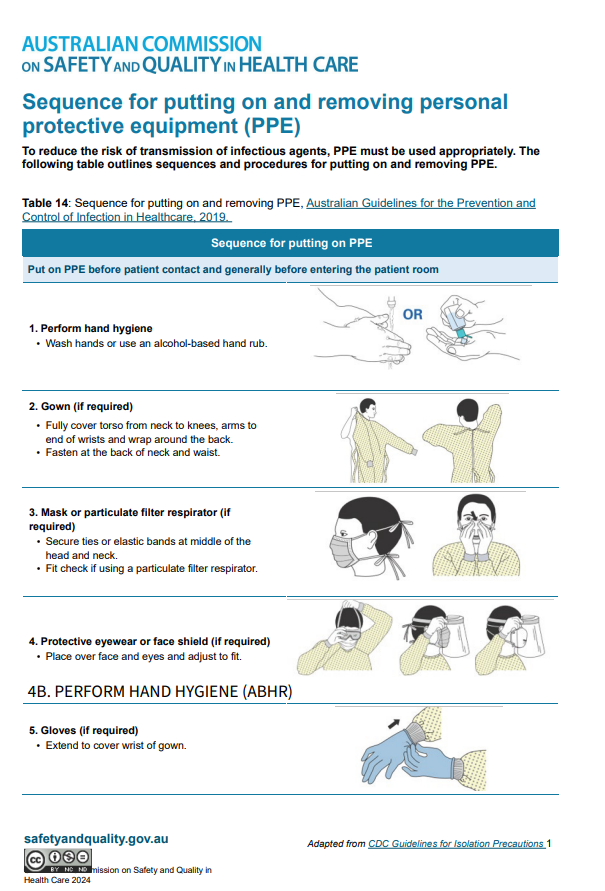
There are particular sequences to donning and doffing. These sequences take into account the chain of transmission and are designed to protect the wearer and the patient alike. The donning and doffing sequences are as follows:
Donning:
This video demonstrates the correct technique for putting on PPE
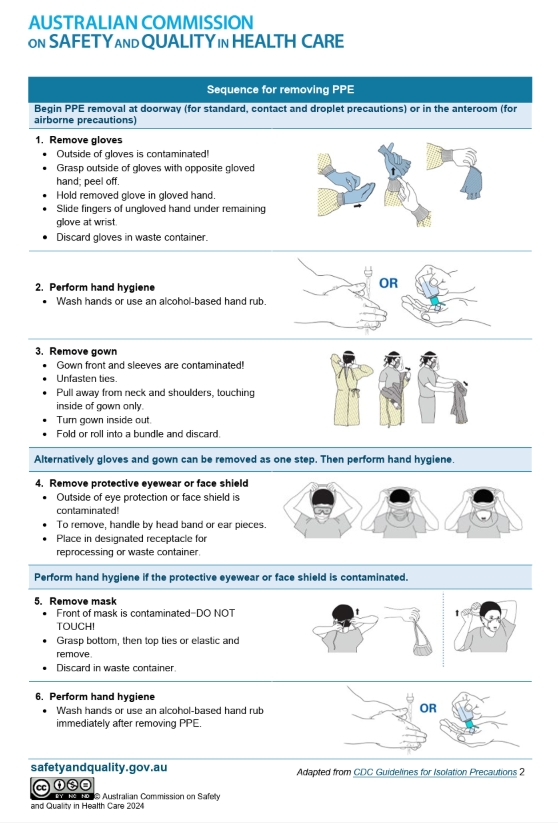
DOFFING:
This video demonstrates the correct sequence for removing PPE
PPE FOR STERI:
When we’re handling, cleaning and processing contaminated instruments in steri, we must wear an impermeable over gown and heavy-duty gloves in addition to our regular PPE. This is due to the amount of spatter that may occur during cleaning of instruments, and because many of the reusable instruments that we must clean prior to sterilisation are sharp. If needed, a plastic face shield may also be worn in addition to a surgical mask in place of protective eyewear.
Below are images of the correct PPE being worn in steri:
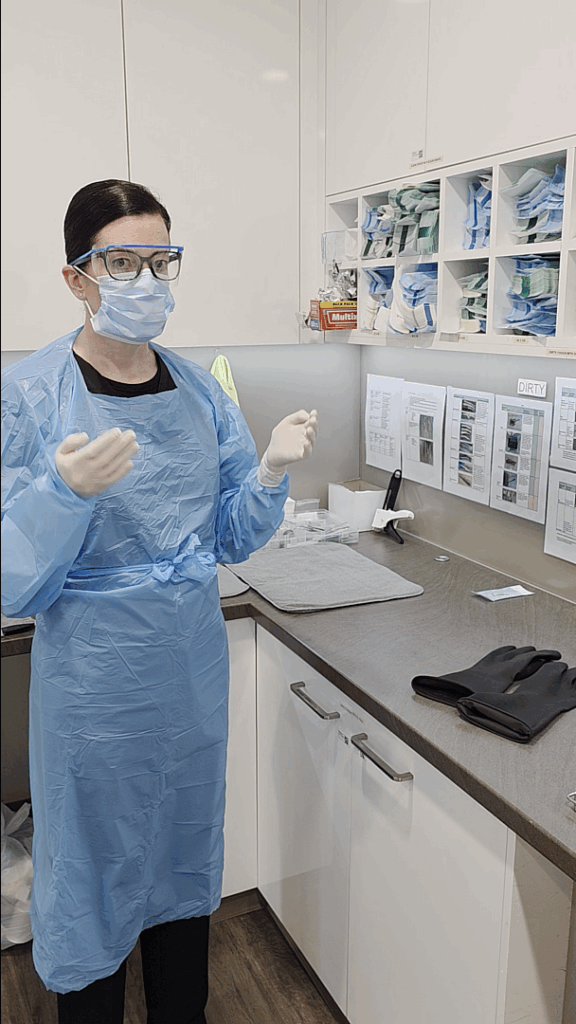
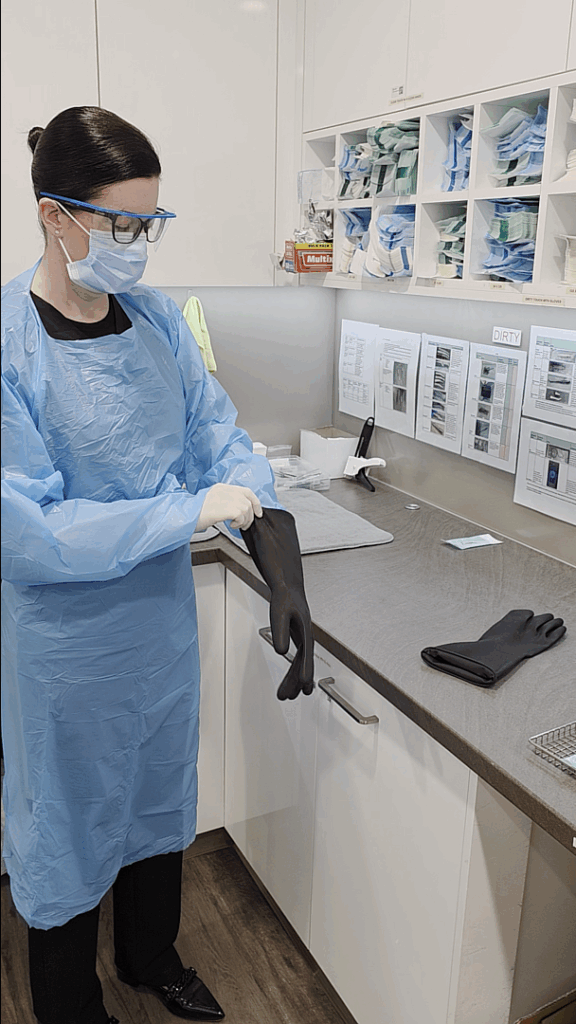
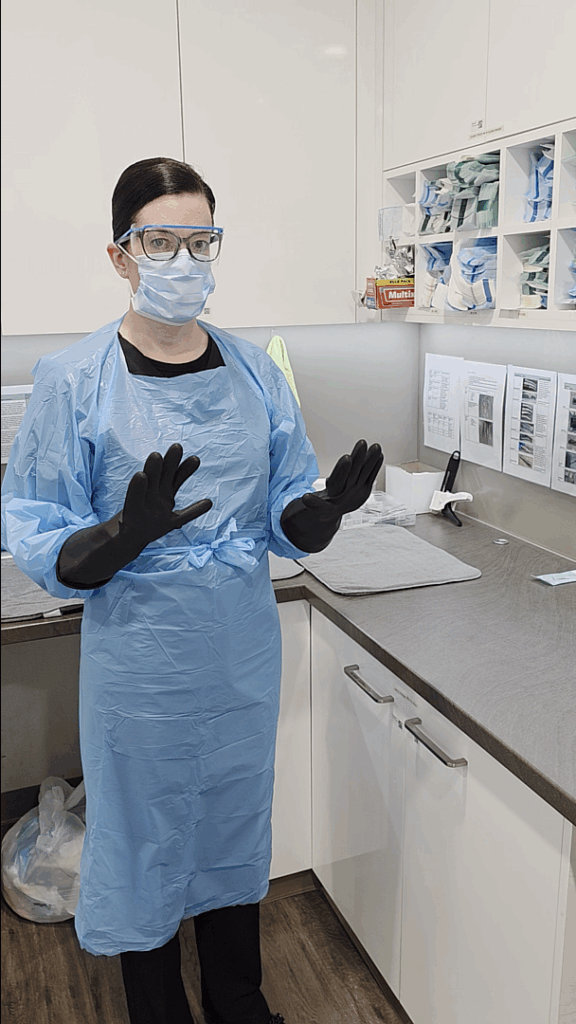
At Dental Boutique practices, we have signage available to assist in the correct process of donning and doffing PPE. An example of these posters is below:
SOME POINTS TO REMEMBER:
- We always wear PPE when we have clinical contact with patients, or when we’re performing cleaning and decontamination tasks
- We perform hand hygiene in accordance with directions when donning and doffing PPE
- We do not wear our PPE in non-clinical areas, such as front reception, staff room, bathrooms, etc. This includes going to the front to bring a patient through for their appointment
- We do not wear our PPE outside work
- We do not wear PPE whilst eating
- We wear heavy duty gloves and a non-permeable over gown when we are processing contaminated instruments in steri
- Corrective eyeglasses alone do not count as PPE
- We ensure that patients’ protective eyewear is cleaned and streak free between each patient – people notice when this is dirty or blurry. Patients think these are dirty even if they’re simply streaked with detergent from cleaning – the little details count too!