
At Dental Boutique, there are many items of equipment that rely on water to operate efficiently. That water supply can come from mains water, or from bottles attached to the equipment. The water runs through small but long tubes on its way through the equipment to the area where it is needed. The tubes that supply the water to the equipment are called waterlines, often shortened to DUWLs (dental unit waterlines). The lines that remove water and other fluid/items from patients’ mouths are called suction lines. This lesson looks at how we must maintain both DUWLs and suction lines.
DUWLs and suction lines require flushing on a regular basis to prevent water from sitting and stagnating. This is an industry-wide requirement.
Let us consider a drink bottle with a straw. If we keep refilling this with water, without cleaning inside the bottle or the straw, slime or biofilm will develop on these surfaces. If we did not clean out the drink bottle, would we be content with drinking from it? Probably not. The same concept applies to our waterlines.
As a reference, DUWLs must be flushed at the following intervals:
- First thing every morning for two minutes
- Between each patient for 30 seconds
- At the end of each day for two minutes.
Suction lines must be flushed at the following intervals:
- Flush one cup of water down each suction line between each patient
- Flush a suction line disinfectant such as Orotol or Pulijet down each suction (high-volume evacuator and saliva ejector) at the end of each day.
If a chair is to be temporarily decommissioned, it must have its water bottle emptied and all remaining water flushed out of the waterlines until dry. It must also have suction line disinfectant flushed through both the high-volume evacuator and saliva ejector. When recommissioning the chair, it should have a second dosing of suction line disinfectant flushed through the suction lines and the waterlines purged for two minutes. It is necessary to perform DUWL testing on recommissioned chairs prior to use and shock treat these lines if required.
The below videos demonstrate how to perform maintenance and cleaning of dental unit waterlines and suction lines.
DUWL FLUSHING (PURGING) PROCESSES:
The video here demonstrates how to flush DUWLs on Planmeca chairs
In this video we can see how DUWLs are flushed on A-dec chairs. Note that this process can also be done for Planmeca chairs if it is not feasible to utilise the self-flushing mechanism at that time.
ADDING CHEMICAL TREATMENTS TO DUWLs:
If we are using bottles to supply water to our chairs, we need to add an ICX tablet (Blu Tab) to the bottle each time we fill it. These treatment tablets are a mild dosing system that helps to reduce the amount of biofilm that forms in DUWLs. Although effective, they are not sufficient alone to prevent the accumulation of biofilm.
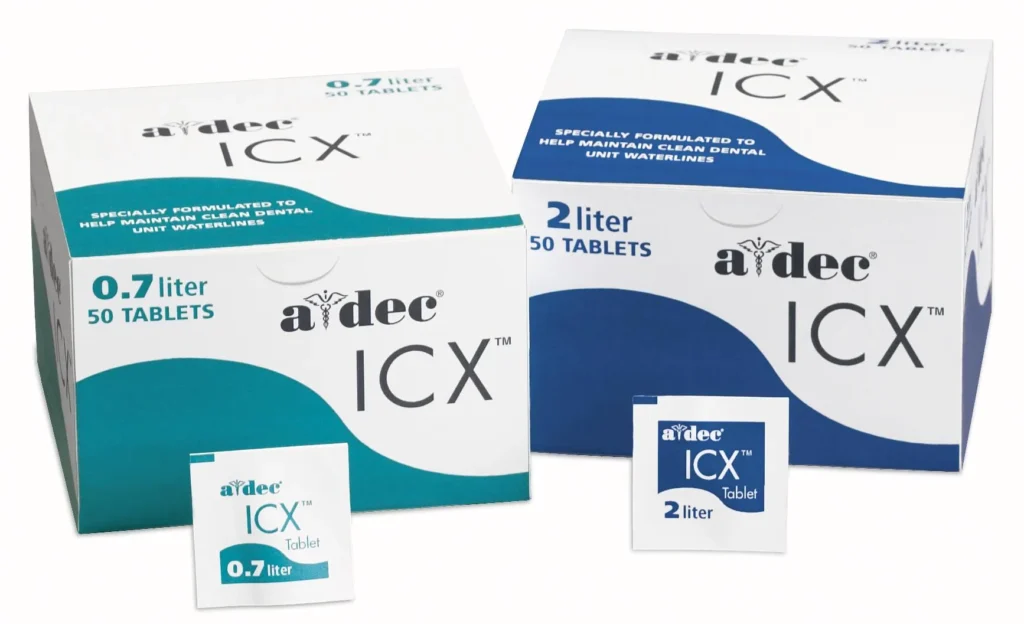
A-dec ICX tablets come in different strengths, depending on the size/volume of the water bottle they are being placed in.
We add ICX tablets to all our chair bottles if they run on bottled water, regardless of the brand or model of chair.
DUWL TESTING:
To ensure that our DUWLs do not form excessive biofilm, we need to regularly check the cleanliness of our waterlines. We perform DUWL testing every six months. We check the results and treat the DUWLs with a process called shock treatment if necessary.
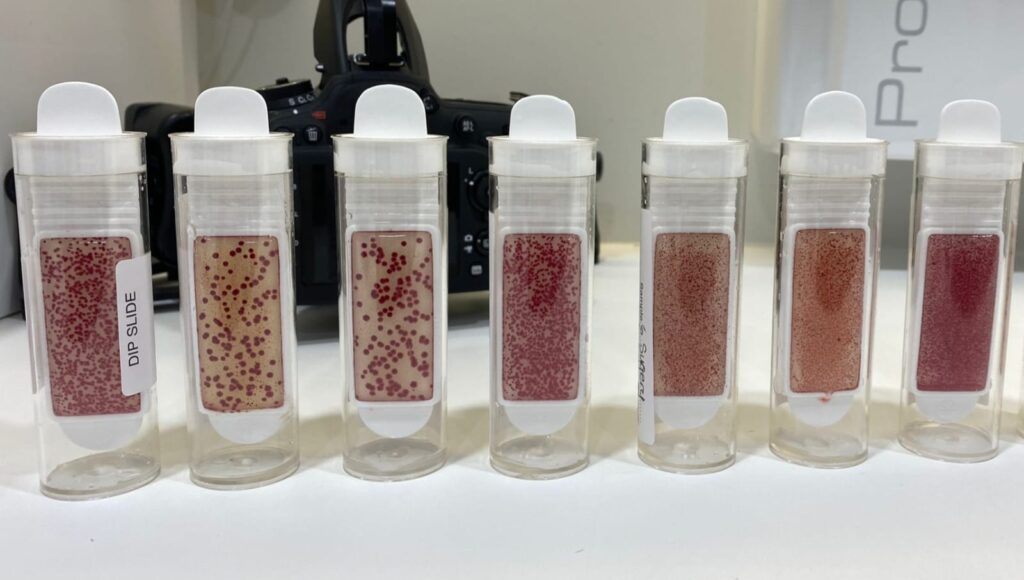
Below is a video demonstrating the DUWL testing process. These tests are referred to as dip slide tests. They come with a guide on how to perform the test and interpret the results.
There is no audio to this video, however it demonstrates nicely the process of performing a dip slide test.
These tests must be incubated at room temperature, and the results logged in the DUWL testing log that each practice maintains.
Water used in non-surgical dental procedures must be 500 colony forming units (CFU) per ml of water or less.
For patients who are immunocompromised, this count must be 200 CFU/ml or less.
For surgical procedures, the water must be sterile – that is, sterile saline which is available in bags from dental suppliers.
Something to keep in mind: we do not always know if a patient is immunocompromised. They may not tell us. They may also not know themselves.
SHOCK TREATING DUWLs:
If our DUWLs yield high levels of contamination, we must perform shock treatment. We then retest the lines two weeks after to ensure that the lines have been decontaminated successfully. If the lines still yield high levels of contamination despite shock treatment, we need to consult with a chair service technician to address the problem.
This video demonstrates the use of ICX Renew, which can be used as a method of shock treatment for DUWLs.
ANTI RETRACTION VALVE TESTING OF DUWLs
Dental chairs are now fitted with valves that prevent the backflow of contaminated water from the patient’s mouth back up into the instrument waterlines. It is unlikely nowadays that we would find a chair without this mechanism. There is a test device available called an anti-retraction test device, which was designed to be used to check that chairs were fitted with these valves. They are also used to check that the valves that area already in place are effective and in good working order. At Dental Boutique, we test our DUWL valves weekly to ensure that they are indeed working.
The below video demonstrates the use of the anti-retraction test device.
This video demonstrates the use of the anti-retraction test. Despite being manufactured by A-dec, this test device can be used on most brands/makes/models of chairs so long as it fits into the water outlet.
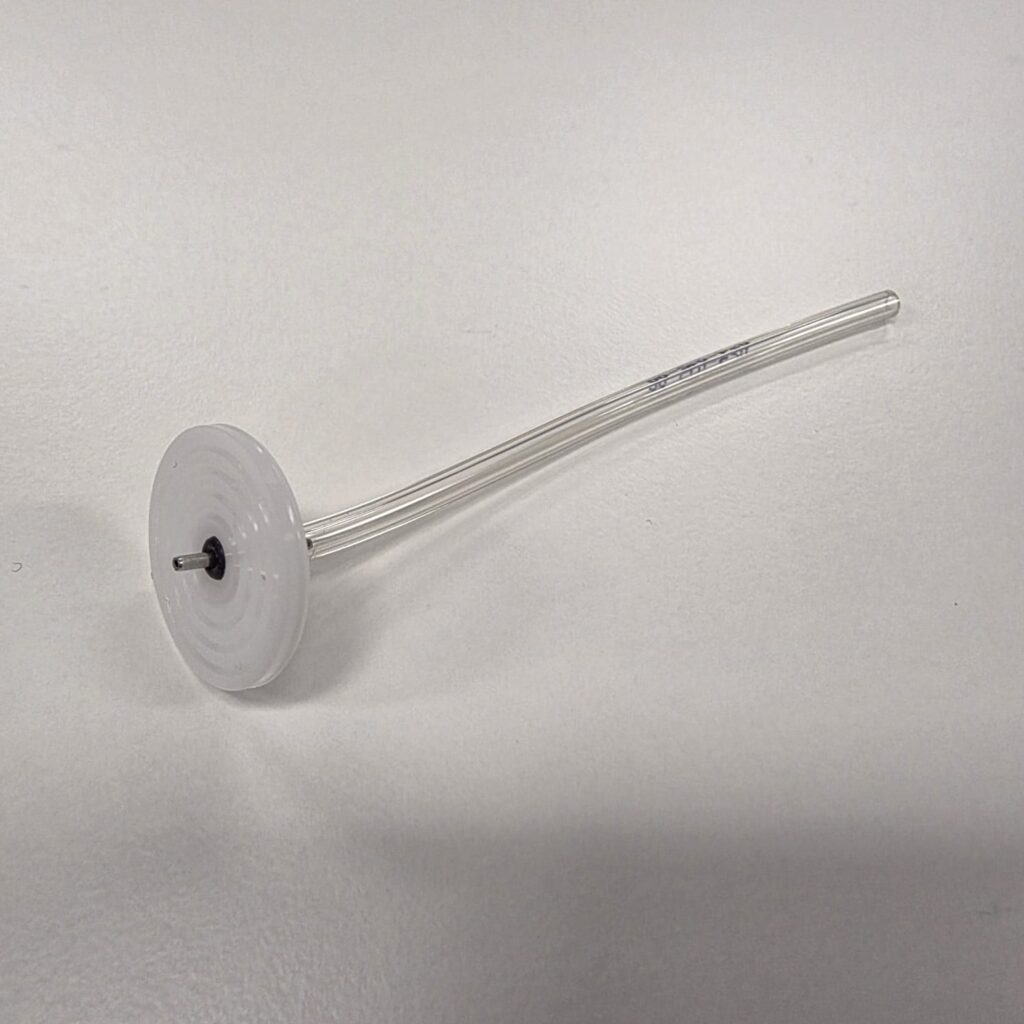
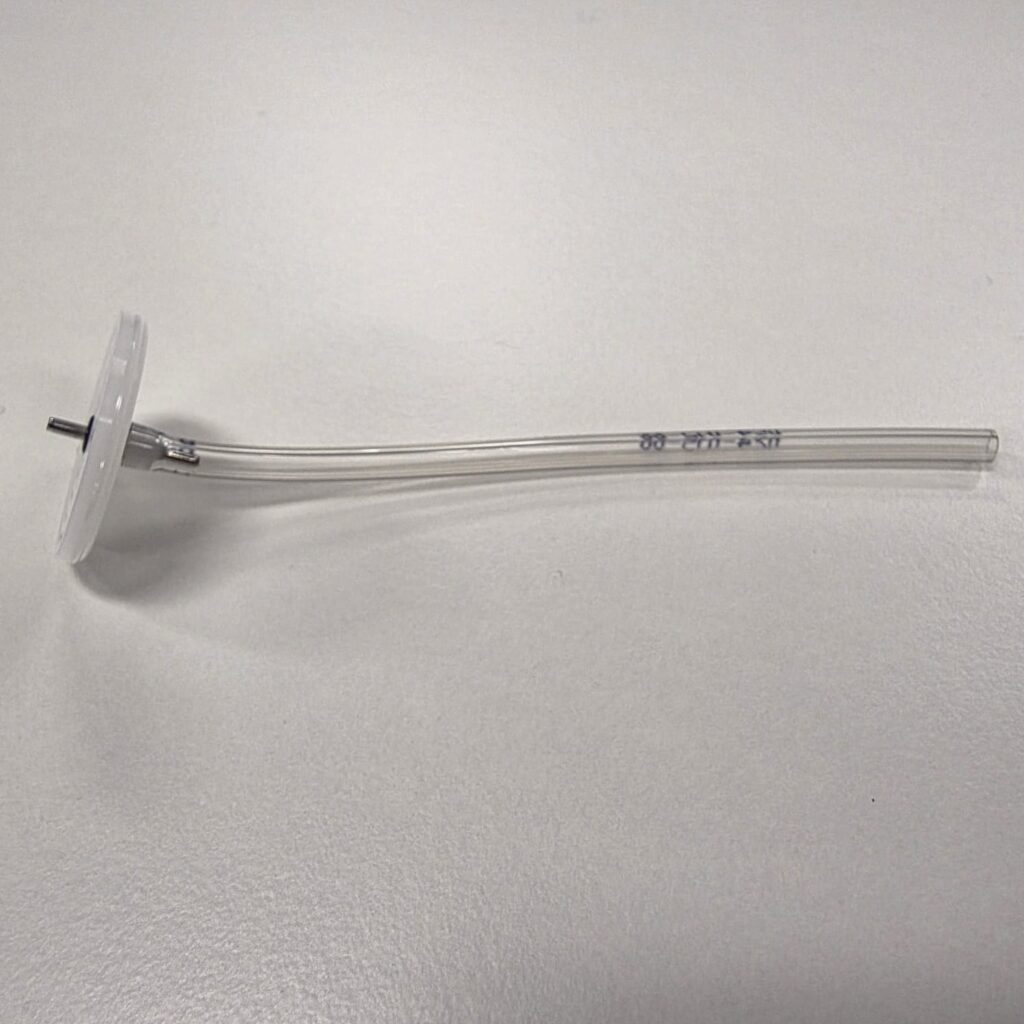
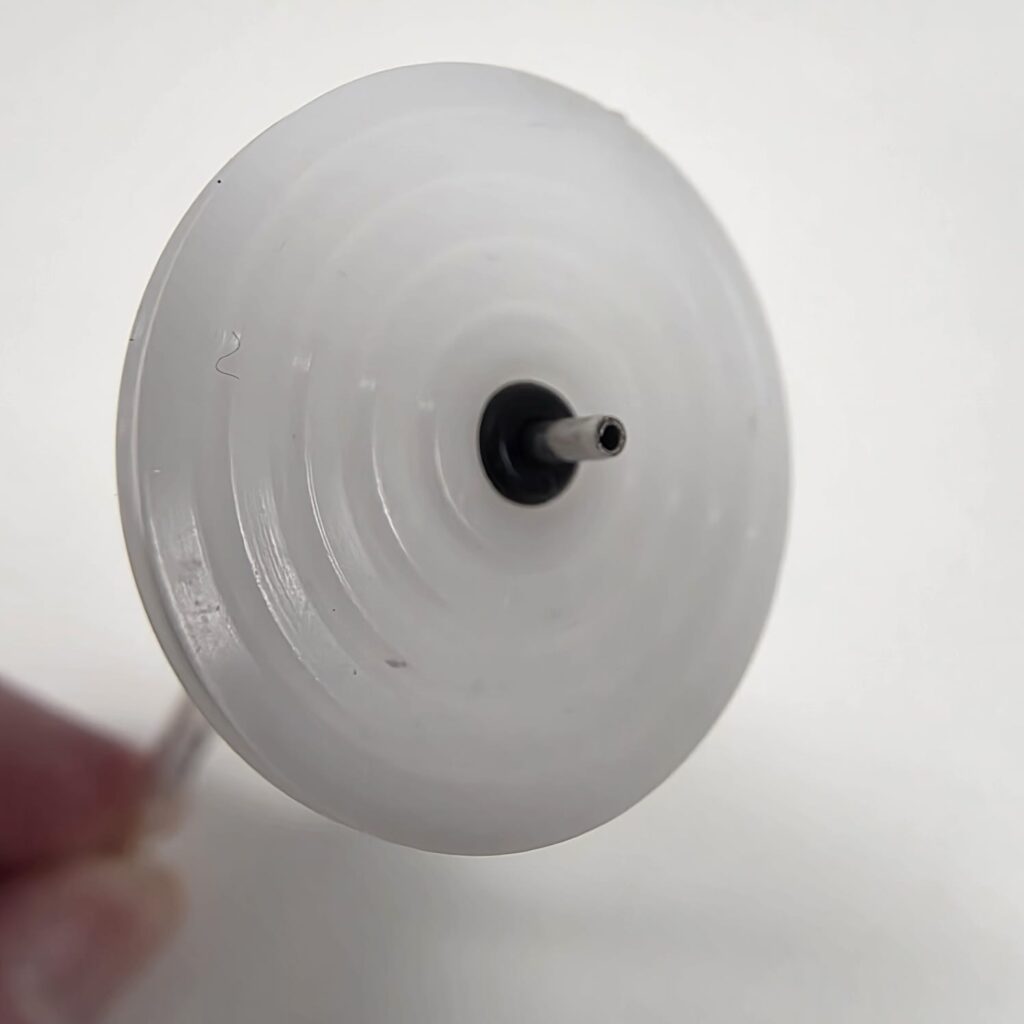
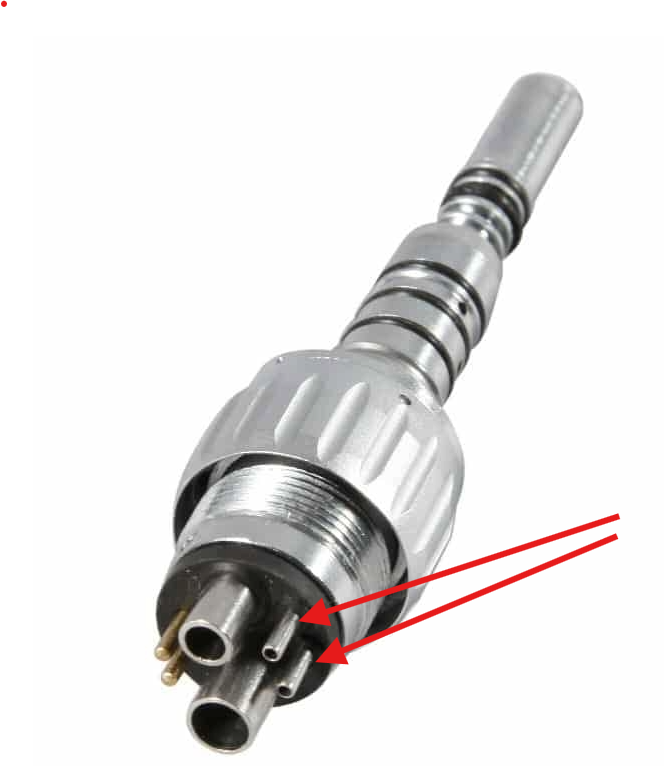
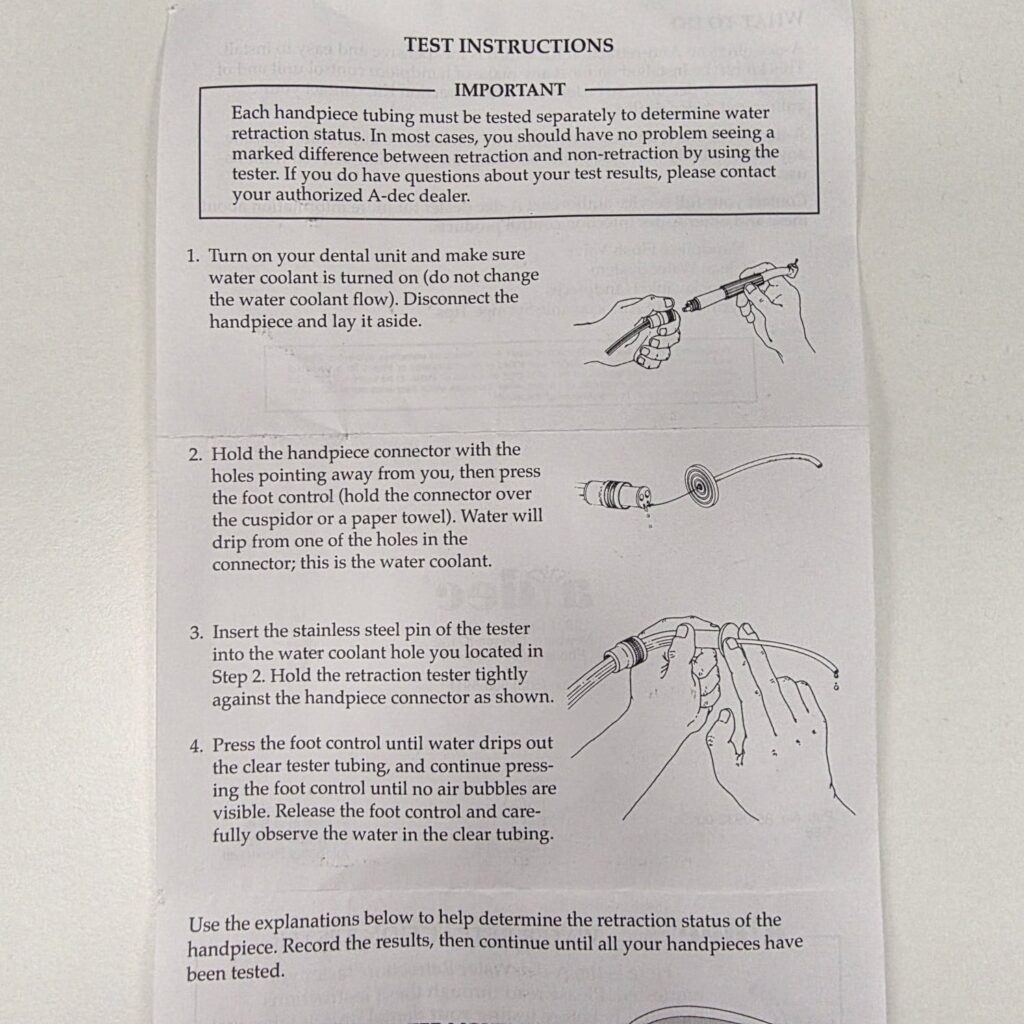
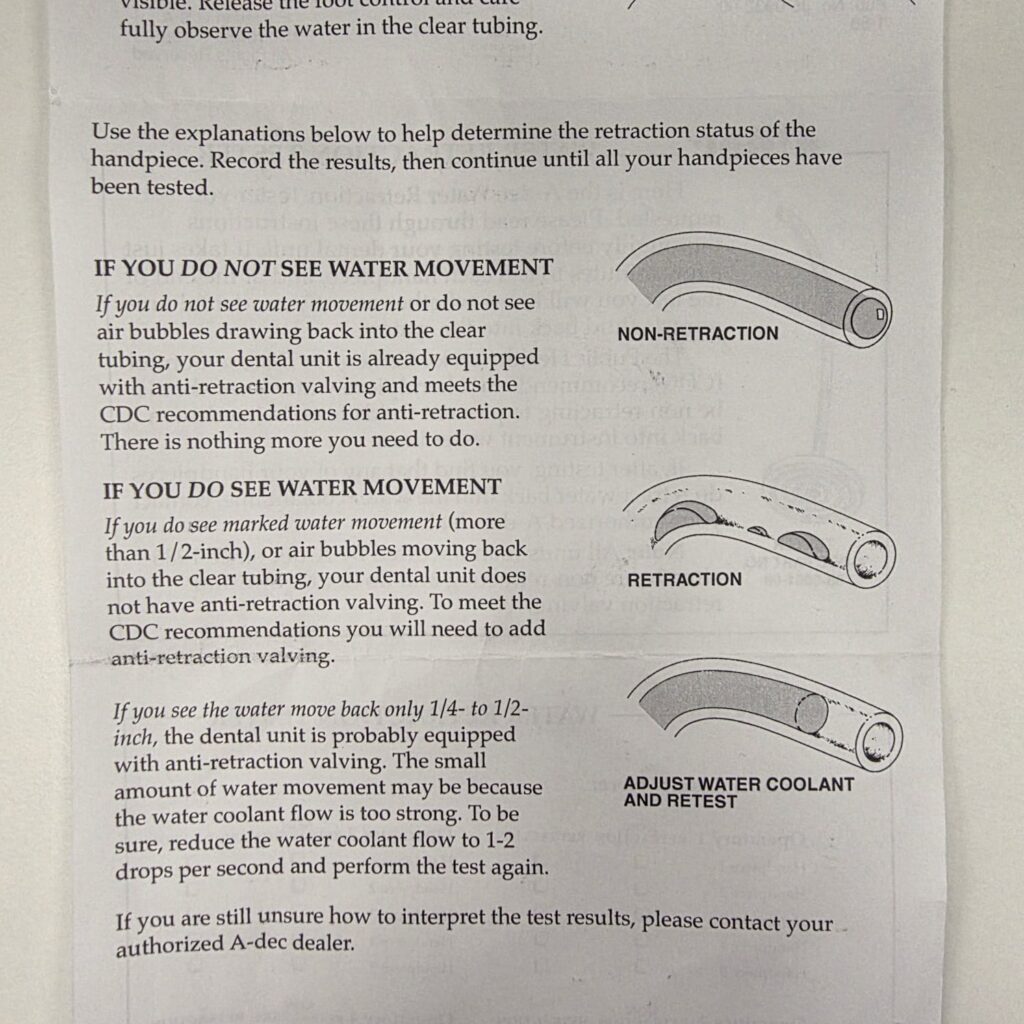
Clockwise from top left: A-dec anti retraction valve test device; A-dec anti retraction valve test device from another angle; Pin opening of A-dec anti retraction test device; Instructions for use page 2; Instructions for use page 1; Close up photo of highspeed handpiece coupling showing waterline opening.
SUCTION LINE FLUSHING PROCESS (BETWEEN PATIENTS):
Demonstration of suction line flushing between patients, A-dec chair.
Demonstration of suction line flushing between patients, A-dec chair.
SUCTION LINE FLUSHING PROCESS (END OF DAY):
This video demonstrates the use of end of day suction line disinfectant such as Orotol or Pulijet. In this video we are using Orotol. Note that we can use this process on both ADEC and Planmeca chairs, regardless of the make and model of the chair.
HERE WE HAVE SOME PICTURES OF BIOFILM, OR THE SLIME THAT FORMS ON THE INSIDE SURFACES OF OUR EQIUPMENT IF WE DON’T CLEAN AND MAINTAIN THEM:
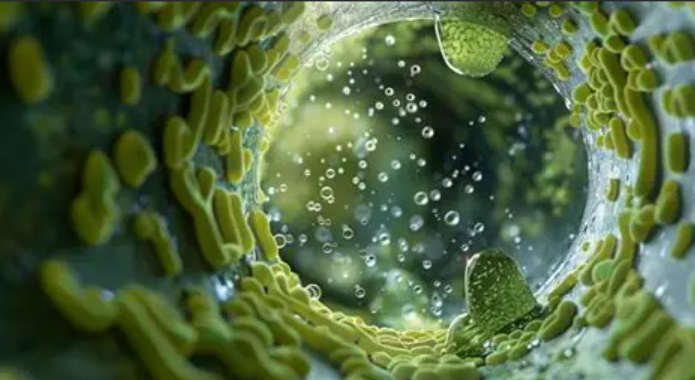
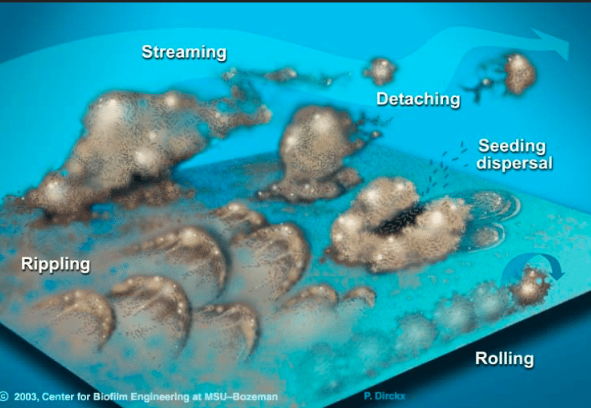
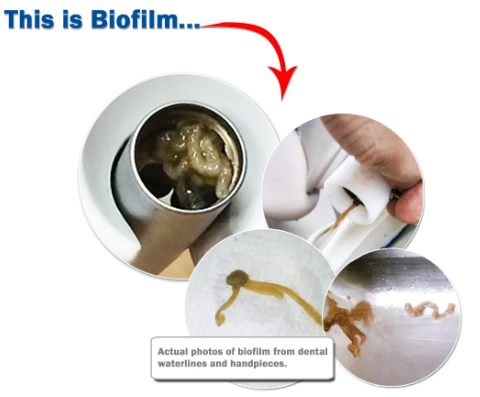
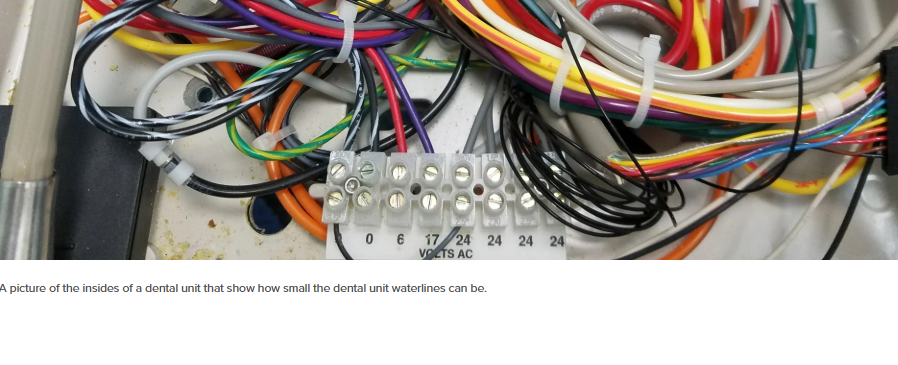
Clockwise, from top left: The Lurkworm; Image of biofilm colonies growing on the inside surface of a waterline; Diagram of biofilm and how it grows and disseminates; Completed dip slide tests, showing very high levels of contamination; Interior of a dental chair showing how convoluted the waterlines and other cabling can be; Actual photo of slime (biofilm) that has been allowed to grow inside the waterline of a handpiece.