
Hand hygiene is one of the most effective and achievable methods of preventing the transmission of disease in the healthcare setting and involves specific handwash and handrub techniques. In this section we will look at these techniques and how they are used within the clinical dental setting.
We must perform hand hygiene when we arrive at work, before entering clinical areas, before and after patient contact, and after removing our gloves. We use alcohol-based hand rub (ABHR) with a minimum 70% alcohol if our hands are not visibly soiled. If our hands are visibly soiled, we wash them with plain neutral hand soap and dry them with disposable paper towels. We always wash our hands with soap after using the bathroom, as some pathogens that are spread via bathroom usage are not as susceptible to alcohol-based hand rub and therefore soap and water is required.
We do not routinely use chlorhexidine-based hand hygiene products due to increasing concerns around chlorhexidine allergy and as part of ensuring good antimicrobial stewardship. We do use chlorhexidine-based hand wash if we are scrubbing in for surgery and are not using 90% ABHR.
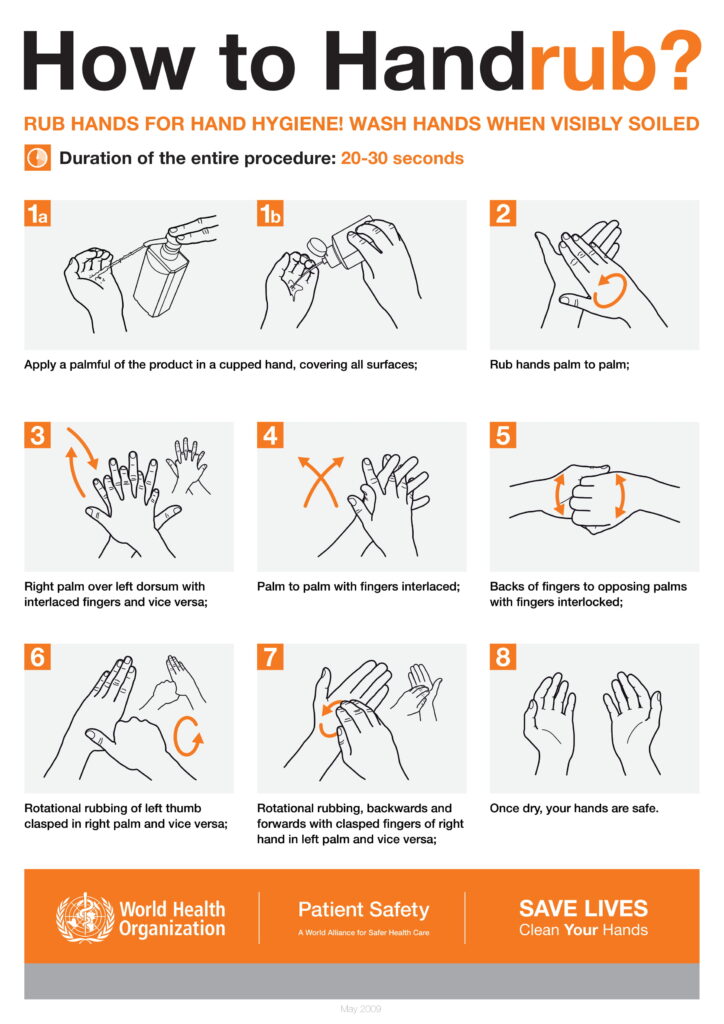
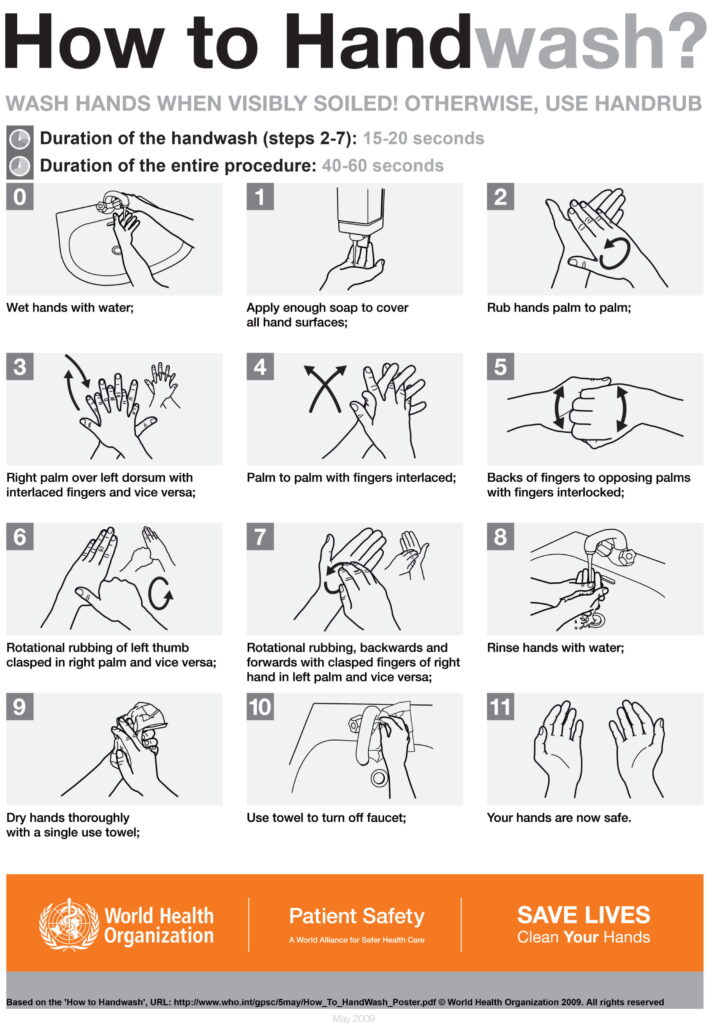
Below are videos demonstrating the correct way to perform hand hygiene using both soap and water, and ABHR:
Some points to note: it is generally regarded that if you are wearing gloves (even clean gloves), your hands are contaminated. Tasks that require clean hands infer that no gloves will be worn (with the exception of aseptic tasks).
Clinical team members must abide by the “bare below the elbow” concept of not wearing nail varnish/artificial nails/nail art; not wearing jewellery apart from a single wedding band if desired (this must be moved around during handwashing/hand rub; and not wearing long sleeves that extend beyond the coverage of the clinical gown.
Clinical gowns are preferably short sleeved. If a long sleeve is necessary, these should be covered by a clinical gown or disposable arm covers.
Uniform standards must always be adhered to.
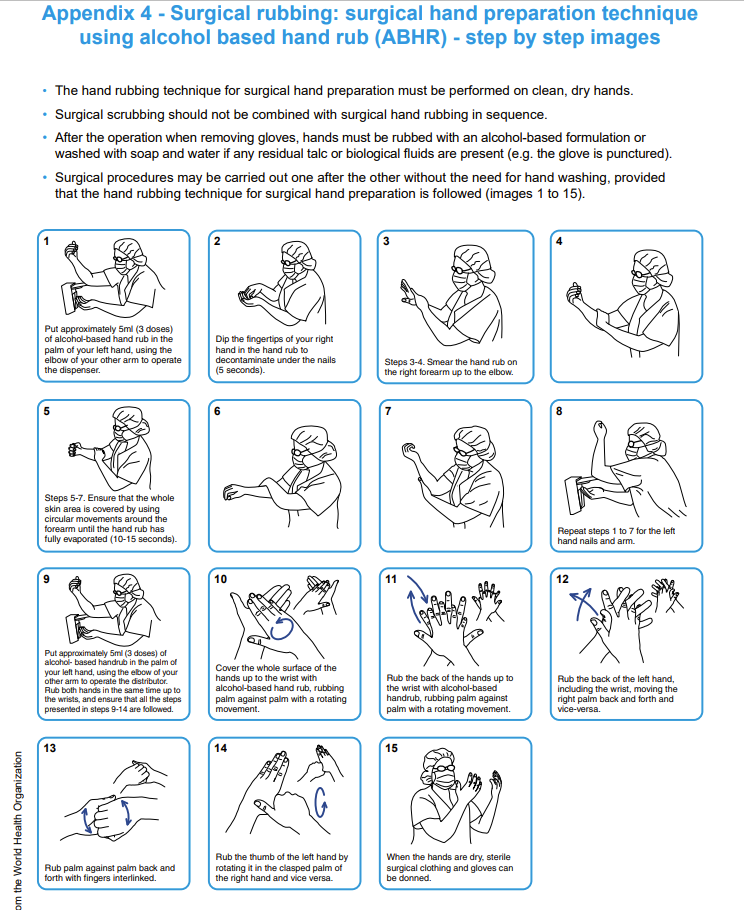
ASEPTIC TECHNIQUE – ALSO KNOWN AS “SCRUBBING IN” PRIOR TO SURGERY: when we are performing surgical/aseptic hand preparation, we use clinical grade alcohol-based hand rub with a minimum of 90% alcohol content instead of chlorhexidine-based hand wash, unless circumstances dictate otherwise. Below is a video demonstrating hand hygiene prior to surgical procedures:
In this video we are demonstrating surgical hand preparation using chlorhexidine-based hand wash. We are then required to dry our hands on pre-sterilised disposable paper towels that are provided as part of our surgical kits.
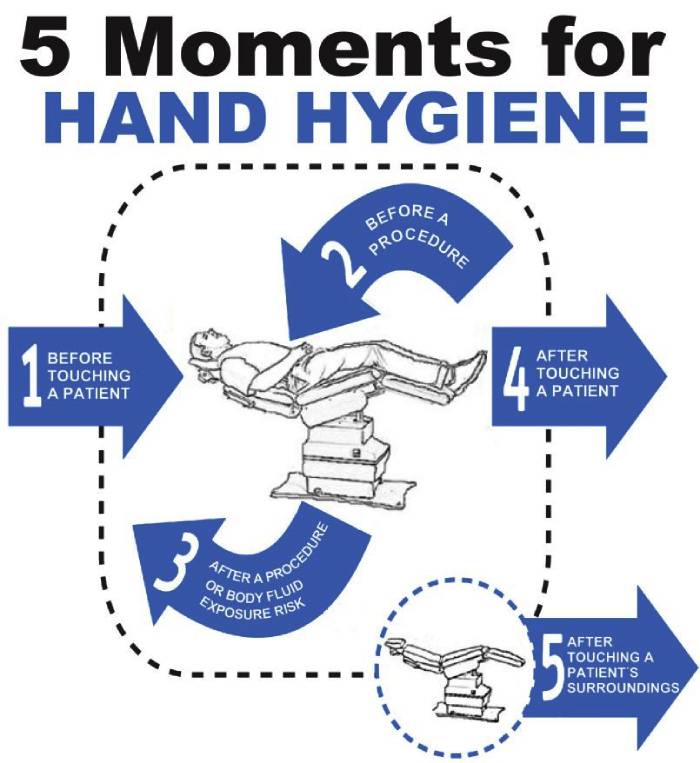
Our practices have the following posters available to assist in maintaining appropriate hand hygiene:
Below is an instructional poster on performing surgical ABHR as part of the aseptic technique:
HAND HYGIENE AUSTRALIA
Hand Hygiene Australia learning modules must be completed every 12 months, with your certificate submitted to your practice manager for record keeping. Follow the instructions in the video below.
Go to Hand Hygiene Australia’s website: hha.org.au. Alternatively, visit https://www.safetyandquality.gov.au/our-work/infection-prevention-and-control/national-hand-hygiene-initiative
Select online learning: Healthcare Module Information, then Complete a Module. Alternatively, select NHHI Learning Management System (LMS) or eLearning modules.
Choose either New Zealand or Australia.
Create login, your organisation will be Dental Boutique.
Module will be Hand Hygiene for Dental Healthcare Workers, or for healthcare administrative staff select the relevant module.
Complete the module as required.
Upon successful completion, save a copy of your certificate and send to your practice manager.
Any questions can be directed to the Compliance team: compliance@dentalboutique.com.au.