- Instruments that have been cleaned and sterilised must be stored appropriately to prevent them from becoming re-contaminated by their environment (environmental contamination).
- Environmental contamination can happen in a number of ways, including exposure to aerosols, touch, and dusty storage containers, to name a few.
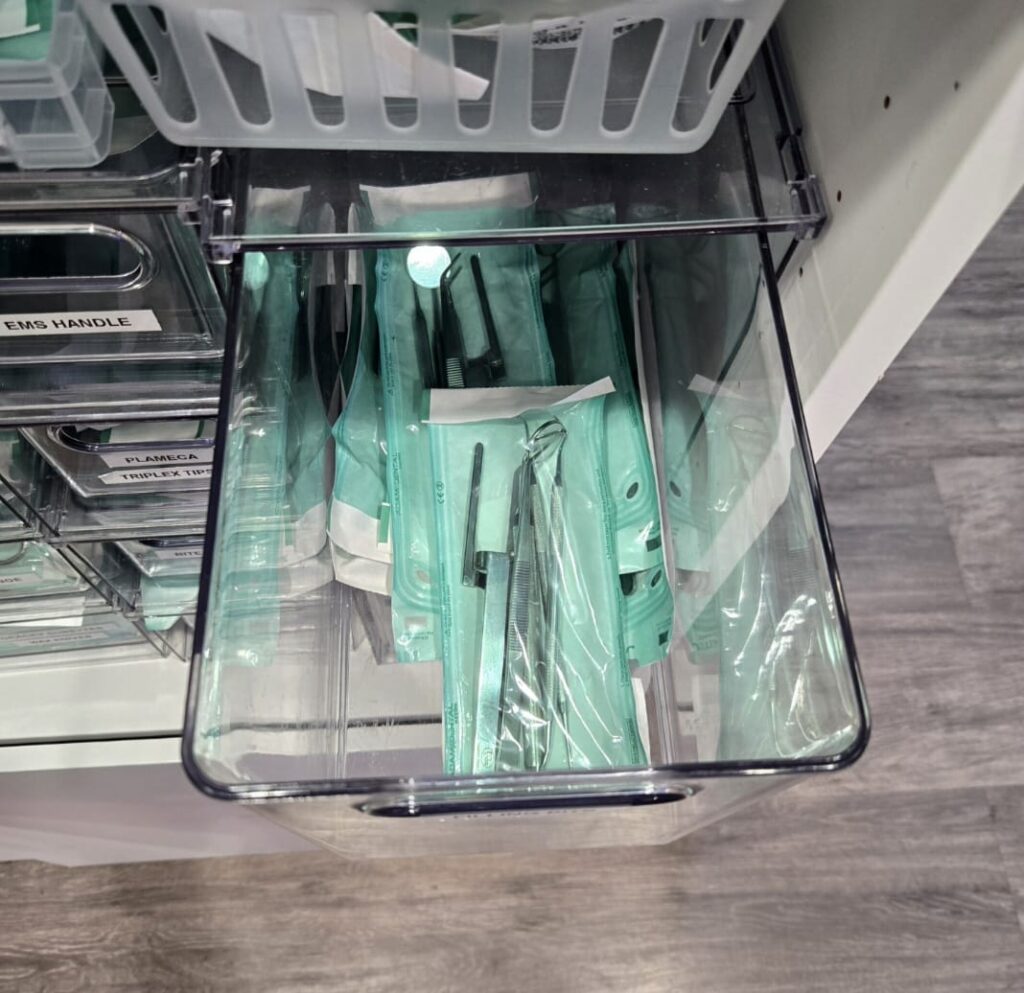
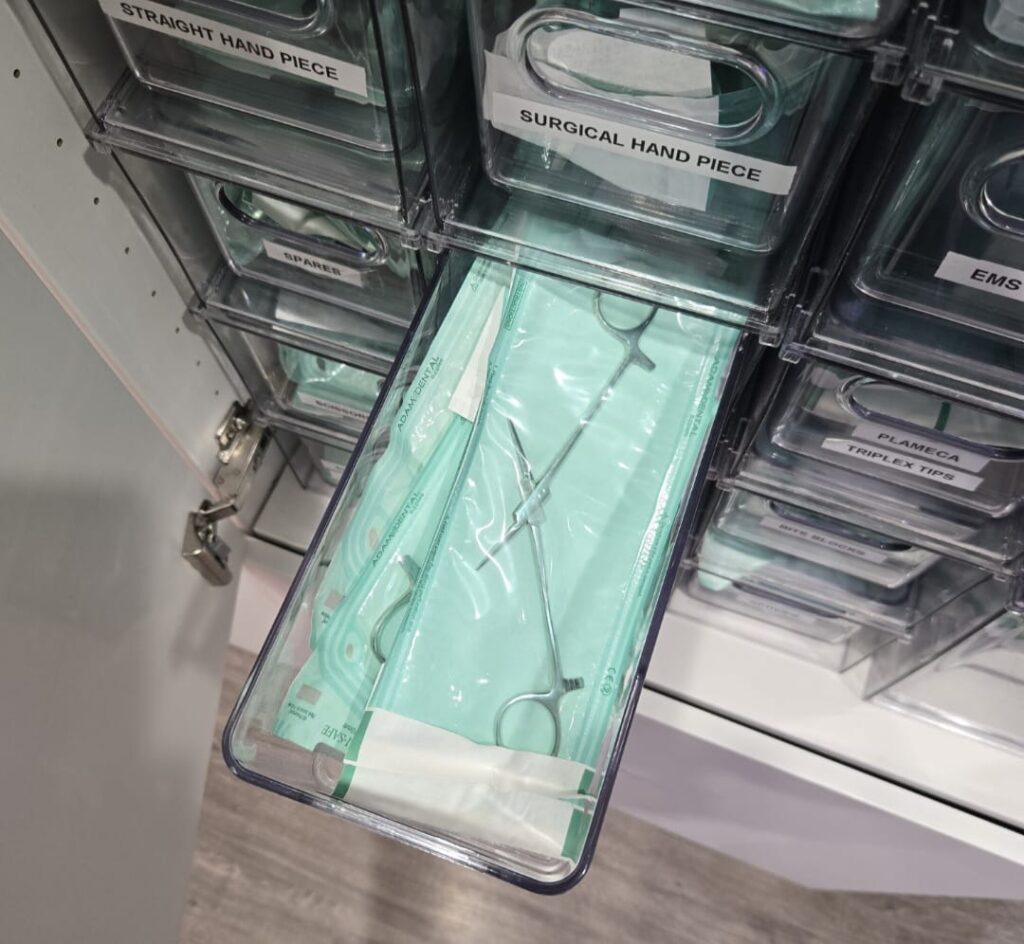
- At Dental Boutique we bag and then sterilise most instruments. These instruments stay in their bags until use.
- All instruments that are being stored must be kept out of the way of aerosols. This means do not leave items on the back bench unless you intend to use them for that current patient.
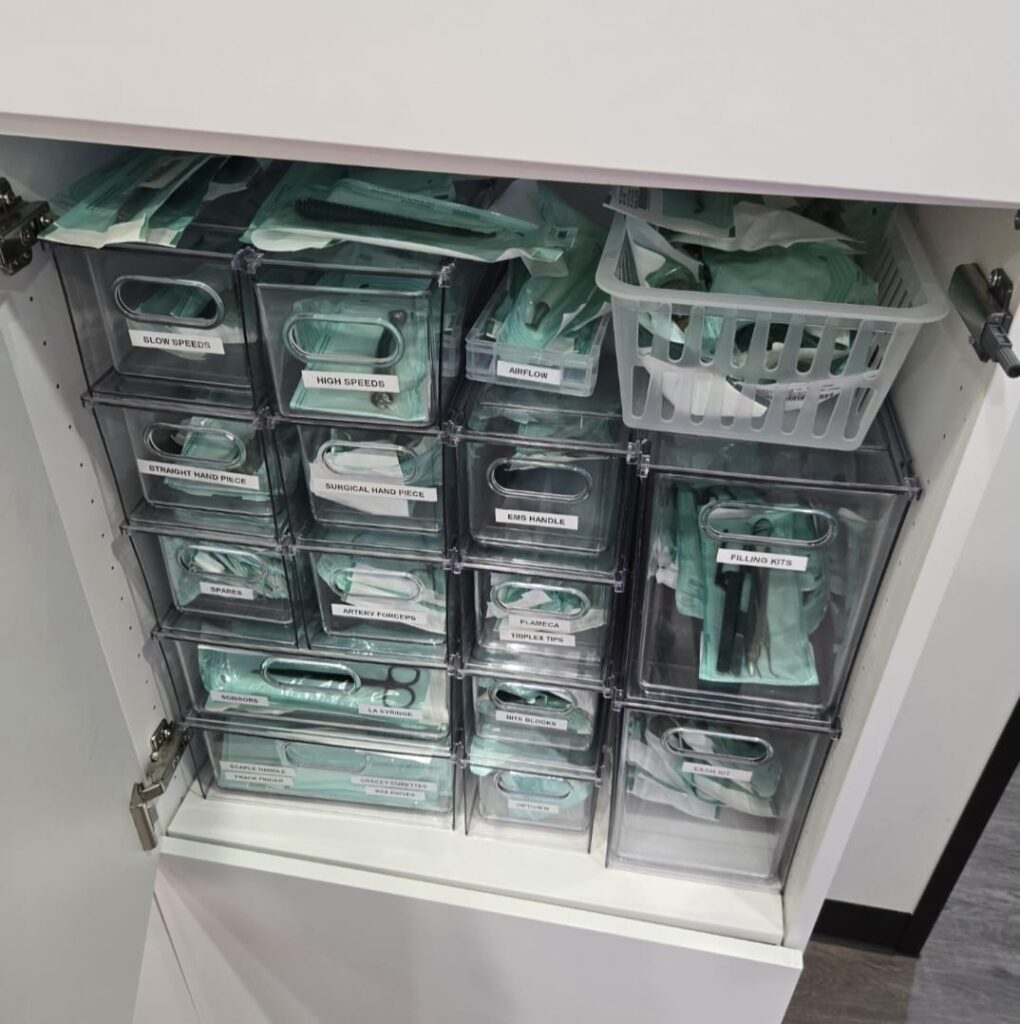
- For items kept in drawers, make sure that the drawers are clean and free of debris and dust. They should be well organised to minimise the need to rummage to find things.
- Ensure that you rotate stock and instruments. Clean and sterilised instruments must be placed at the back of the pile when restocking, so that older items are used first. Generally, instruments must be used within 12 months of being sterilised, unless a different expiry date has been applied.
- Keep items in their packaging until use. Do not dispense local anaesthetic (LA) carpules out of their blister packs until they are about to be used for that current patient.
- If items in storage become wet, they must be resterilised. This could happen due to spills, plumbing leaks, etc. For any item that is stored in an autoclave bag, if the paper side becomes wet, soiled, or contaminated in any way such as with another dental product or oil from hands, it must be resterilised as the paper will no longer have provided a solid barrier – it is only paper after all. We should not unnecessarily handle sterilised autoclave bags for this reason.
Below are some examples of appropriate storage solutions for processed instruments. Note that they are kept away from moisture and environmental contamination and are labelled to minimise handling/rummaging: