SHARPS MANAGEMENT
Sharps consist of sharp medical/laboratory equipment which, when handled may accidentally cause a penetrating injury of the skin. These include needles, scalers, scalpel blades, broken glass, burs, etc. Also included are various hard plastic items.
Reusable sharps are any item that is capable of causing a lacerating or puncture injury and are to be cleaned and sterilised after use. Examples of these include luxators, scalers and burs.
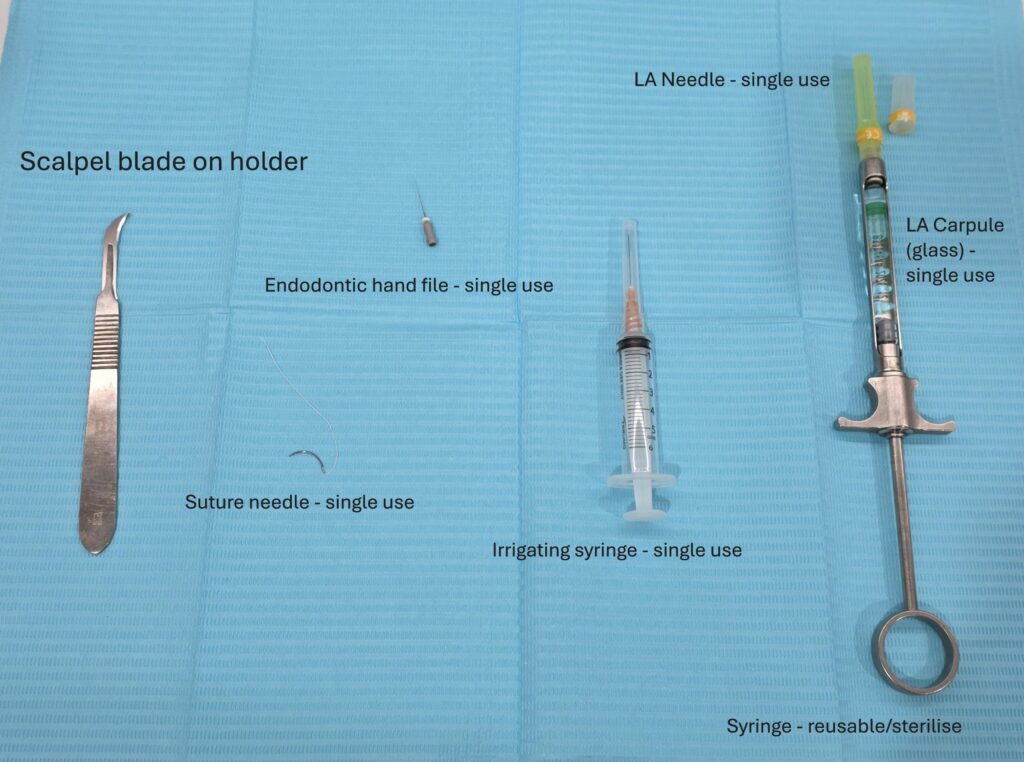
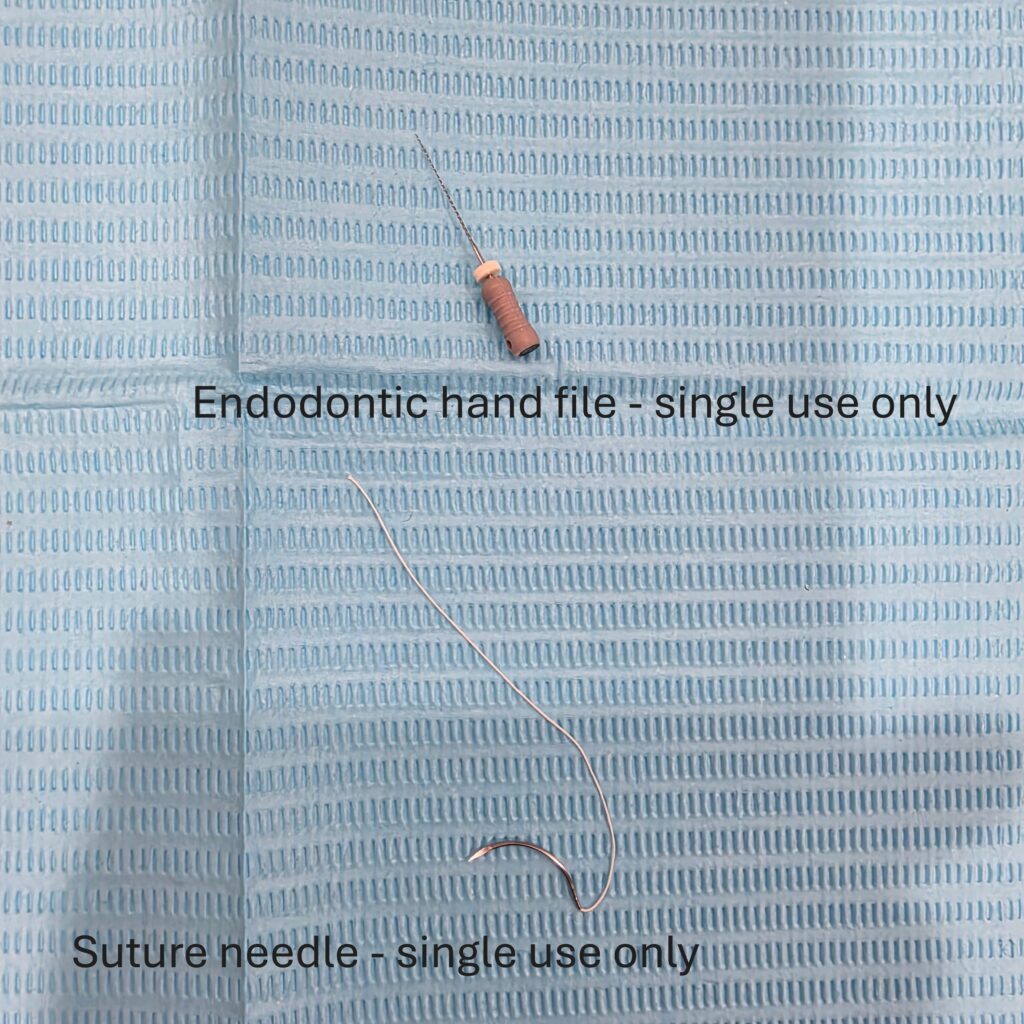
Disposable sharps are items that are to be discarded after use. They are also known as single use items.
All sharps, whether disposable or reuseable are to be dismantled by the practitioner. The practitioner is responsible for disposing of single use sharps. These items are not to be handled by the dental assistant.
Reusable sharps are to be transported to steri in a lidded, puncture-resistant container. Disposable sharps are not to be transported to steri – rather they are to be disposed of at point of use. For this reason, there are no sharps bins in steri.
CORRECT HANDLING AND DISPOSAL OF SHARPS
Below are some examples of disposable sharps:
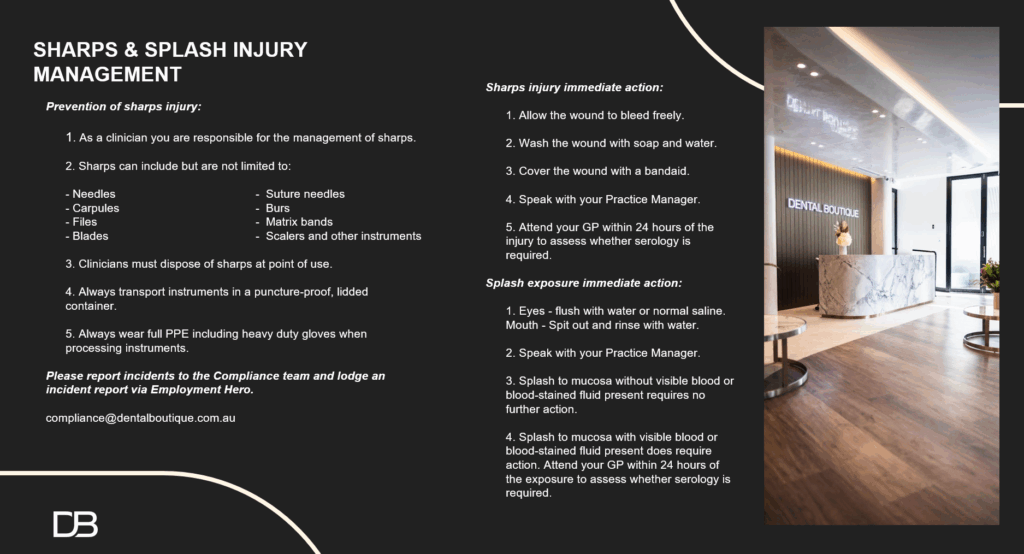
Below is the Sharps and Splash Management Poster that is available at our practices. It has important information on how to manage and report a sharps injury:
CLINICAL WASTE
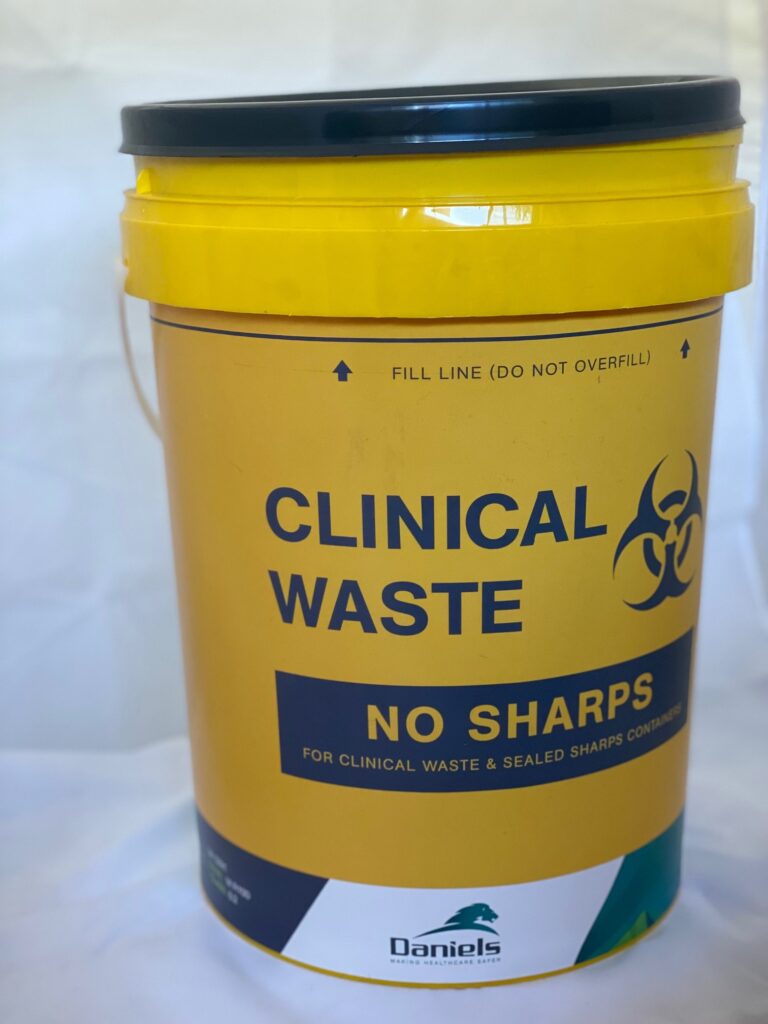
Clinical waste is also known as contaminated waste. It is to be disposed of via designated clinical waste bins, which are available in steri. These yellow bags are marked with the Biohazard symbol. Once the bins in steri are full they are placed in the locked yellow bin at the practice and collected by a licenced professional. We need to keep destruction certificates provided by the collection company, as we are responsible for this waste, even in transit.
Anything that is soiled with blood, body fluids or body tissue is to be placed in clinical waste.
Extracted teeth do not go in clinical waste due to the potential to have amalgam fillings. Given that all clinical waste is incinerated, and we do not want amalgam incinerated as it may release mercury into the environment hence extracted teeth are placed in general waste. This is as per Australian Dental Association guidelines on amalgam management. If extracted teeth are heavily coated in tissue, they can be scrubbed in steri before being wrapped in paper towel and placed in general waste.
Extracted teeth visibly restored with amalgam should be separated from other waste and recycled with other types of amalgam waste.
Below is an example of a clinical waste bin with the biohazard symbol.