
When we unload autoclaves, we do not simply open the door, unload the items and put them away. There are specific steps we must take to ensure that the cylce has been performed correctly, the items inside are indeed sterile, and that they are tracked in our practice’s management software. They are then tagged with stickers if necessary and put away for safe storage.
The first step we take when completing an autoclave load is to check the screen:
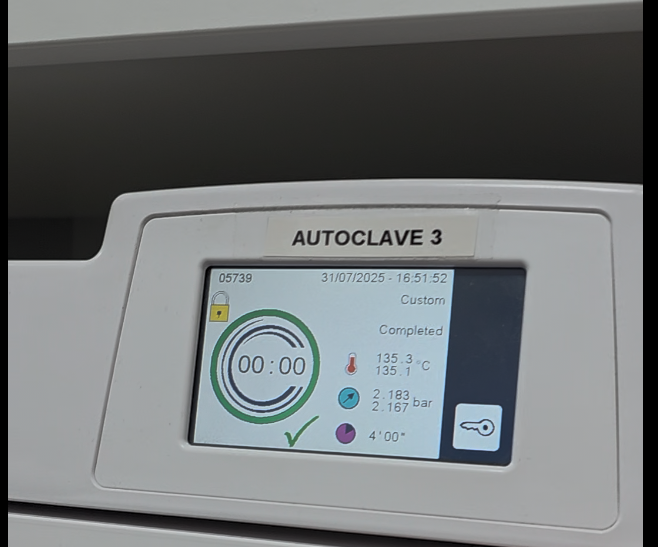
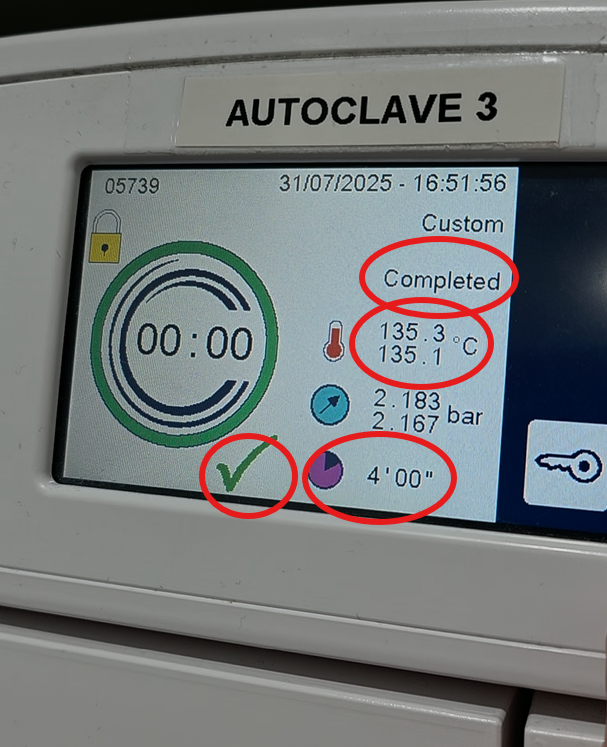
Once autoclave/steriliser has finished a cycle, ensure that the screen shows that the cycle was successful with no errors, and that the temperature reached was a minimum of 134 degrees Celsius for a minimum of 3.5 minutes for a Universal Standard cycle. Other parameters may be displayed, please check according to which cycle was used, eg. A Universal gentle cycle would display 121 degrees Celsius for a minimum of 20 minutes.
Note that we cannot use cycles that the autoclave has not been validated for, and that we do not use quick cycles, eg. Quick B as these do not have adequate drying time and are designed for unwrapped loads.
Once the screen details have been confirmed and the cycle was successful, open the autoclave with clean hands (no gloves).
Below is a photo of an autoclave screen that shows a successfully completed cycle:
We can then open the door and unload the sterilised items:
Use a specially designed autoclave handle to remove the trays (caution, they will be very hot and burns are a distinct possibility if not handled with care) and place them on the clean bench.
Print enough labels for the number of packages in the load.
We then check the autoclave bags/pouches for integrity:
Once the sterilised items are cool enough to handle, check the bags to ensure they are dry and intact. If any packages are wet, the sterile barrier system will not be valid and the items will become contaminated the minute the touch the bench. Any packages with excessive condensation need to be considered for different size bags, or lessening the number of items in the load. Packages must also be intact, with no punctures from sharp instruments, or rips from the loading or unloading process – this can happen with larger items when taking them out of the autoclave.
Ensure that the section that has been sealed is still fully sealed – if items are not sealed on the perforation they are likely to open at the corners during the sterilisation process. This results in open bags which compromises the sterile barrier system. Items will no longer be sterile once they leave the autoclave chamber.
Handling of sterilised autoclave bags/pouches:
Ensure that you are not wearing hand lotion when handling sterilised items, as lotions and creams can compromise sterility either by direct touching of unwrapped items or by contact with the paper side of autoclave pouches. The lotion can seep through the paper, compromising the sterile barrier system.
Further, handpieces that are not adequately drained of oil can leak oil during the sterilisation process, which again compromises the sterile barrier system.
If any items that are meant to be bagged or wrapped have their bags/wraps/pouches compromised, they must not be used on patients and instead be re-bagged and resterilised. Due to the amount of time this adds to getting instruments through steri and back into circulation, it pays to do things properly first time around, rather than rectifying avoidable errors.
Checking chemical indicators:
Ensure that chemical indicators have changed appropriately. These indicators include those on the autoclave bags/pouches, and the additional class 6 indicator that we place in a bag in each load. If indicators have not changed, or if they have not changed substantially enough to provide assurance, it should be assumed that the load has not been successfully sterilised. Each item in the must be re-bagged and resterilised. We do not keep processed indicators as proof of sterilisation, due to their instability and tendency to change colour a few hours after use. It is enough that they are viewed by the unloading operator upon unloading and releasing the sterilised load, with this information being included in the autoclave log in the practice’s management software, eg. Core Practice or Principle.
We also do not keep the indicators from inside the Helix/Bowie & Dick-type tests that are performed in the mornings. Rather, we include in the log whether the indicator has changed as required.
Below are some photos of the chemical indicators that we find on autoclave bags. There are two types on each bag. One is a steam indicator; the other is for Ethylene Oxide (EO). The EO indicator will not change as it is not a process that we employ in dental practices in Australia. The steam indicator is a Class 1 type indicator, which means it changes colour when exposed to steam/heat only. It usually turns from blue to black/dark brown. This may depend on the packages/bags used at the practice. Always make sure you are aware of the type of bags used at the practice, and of what the indicator should look like before and after a successful steam sterilisation cycle.
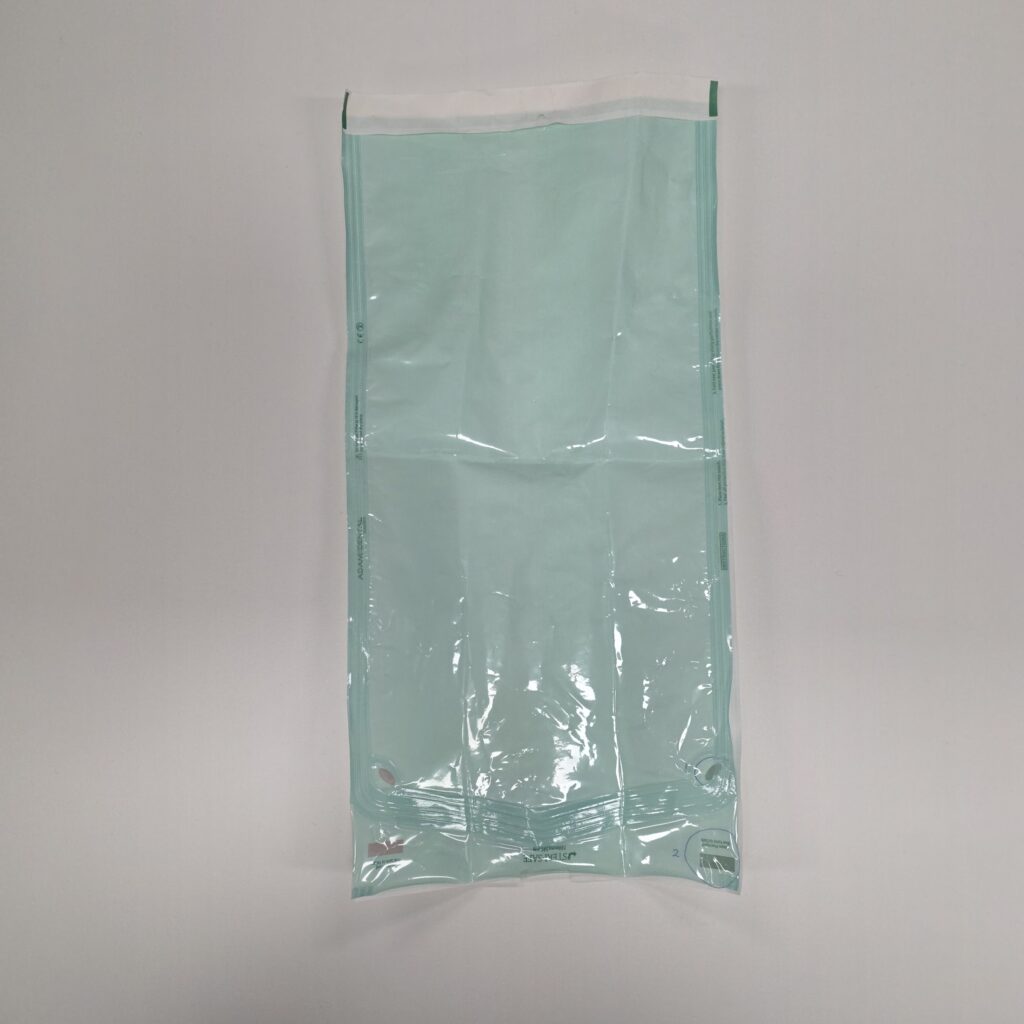
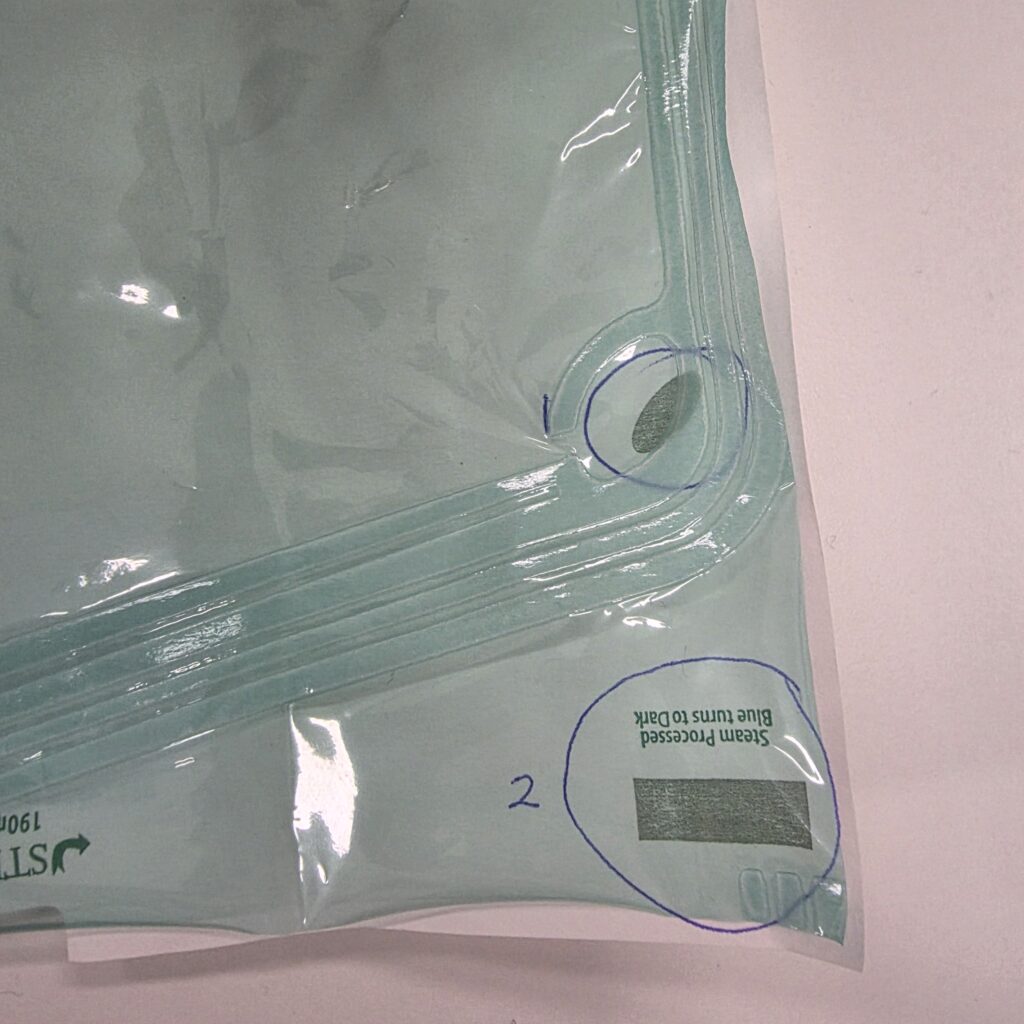
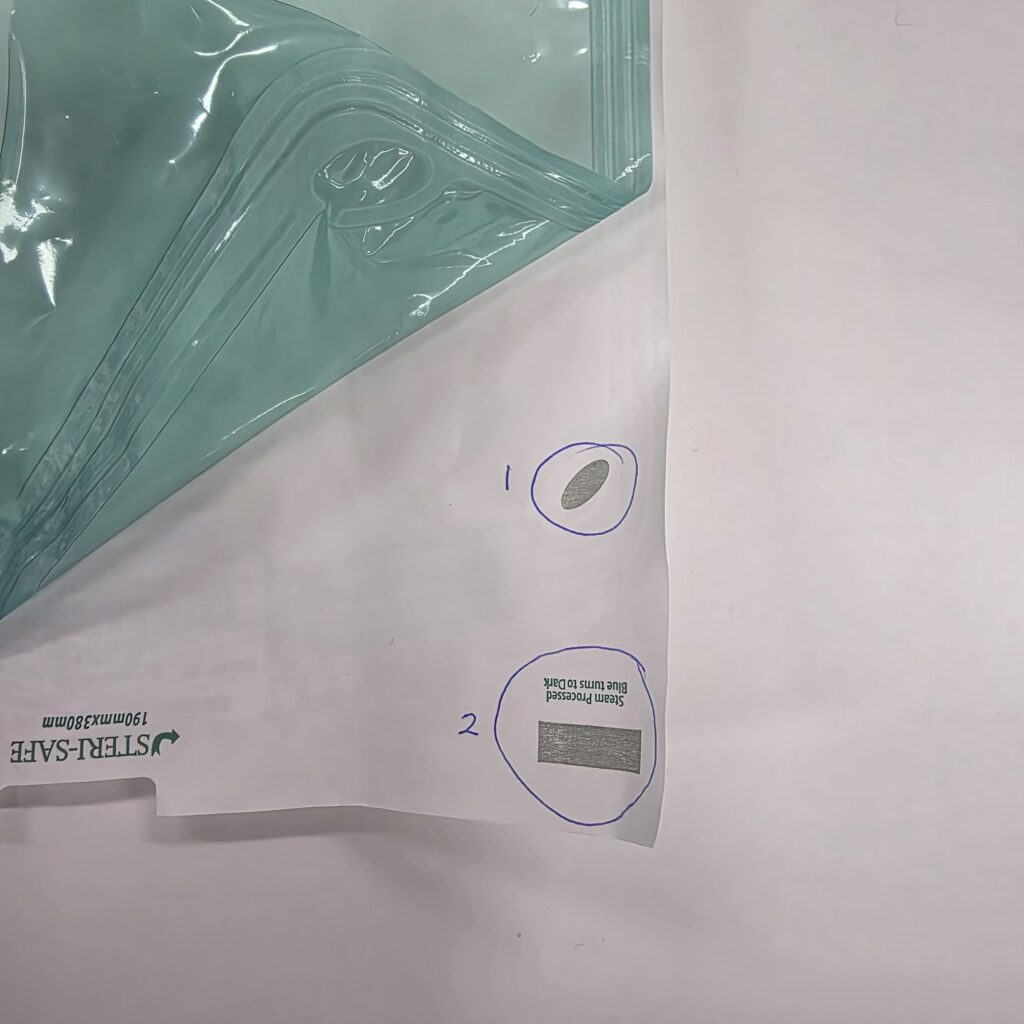
Clockwise from top left: autoclave bag that has been processed; Class 1 indicators that have been processed – they have changed from light blue to black – number 1 is technically an internal indicator whereas number 2 is an external indicator (number 1 will be inside the bag until it is opened and the plastic peeled back).